What Is Tour Package
What is tour package. Learn what is a tour package, what it includes, how different package types work, and who benefits most from packaged travel
Travel12 min read

A tour package combines at least two distinct travel-service categories for the same trip, such as transport, accommodation, car rental, tours, or activities, purchased through one point of sale or under an inclusive price. But is every hotel-and-flight bundle a true package, or can the word describe a booking that offers little more than items displayed together?
That distinction matters when plans change. A package may put an organizer in charge of the included services, while separately booked or loosely connected reservations can leave you coordinating with each supplier yourself. The label alone doesn't tell you what's covered, so it's worth checking how the booking is assembled and who's responsible before paying.
Defining a Tour Package in Plain Language
In everyday travel advertising, “package” can mean almost any group of trip components promoted together. Operationally, though, a tour package is a combination of at least two different travel-service categories for the same trip, such as passenger transport and accommodation, or a hotel stay and a qualifying destination experience. Under European Union rules, the combination may be arranged by one trader, assembled at the traveler's request, sold for one inclusive price, or marketed as a package. [The European Parliament's briefing on package travel](https://www.europarl.europa.eu/RegData/etudes/BRIE/2024/757785/EPRS_BRI(2024)757785_EN.pdf) explains how this framework applies to travel arrangements, including those assembled through digital channels.
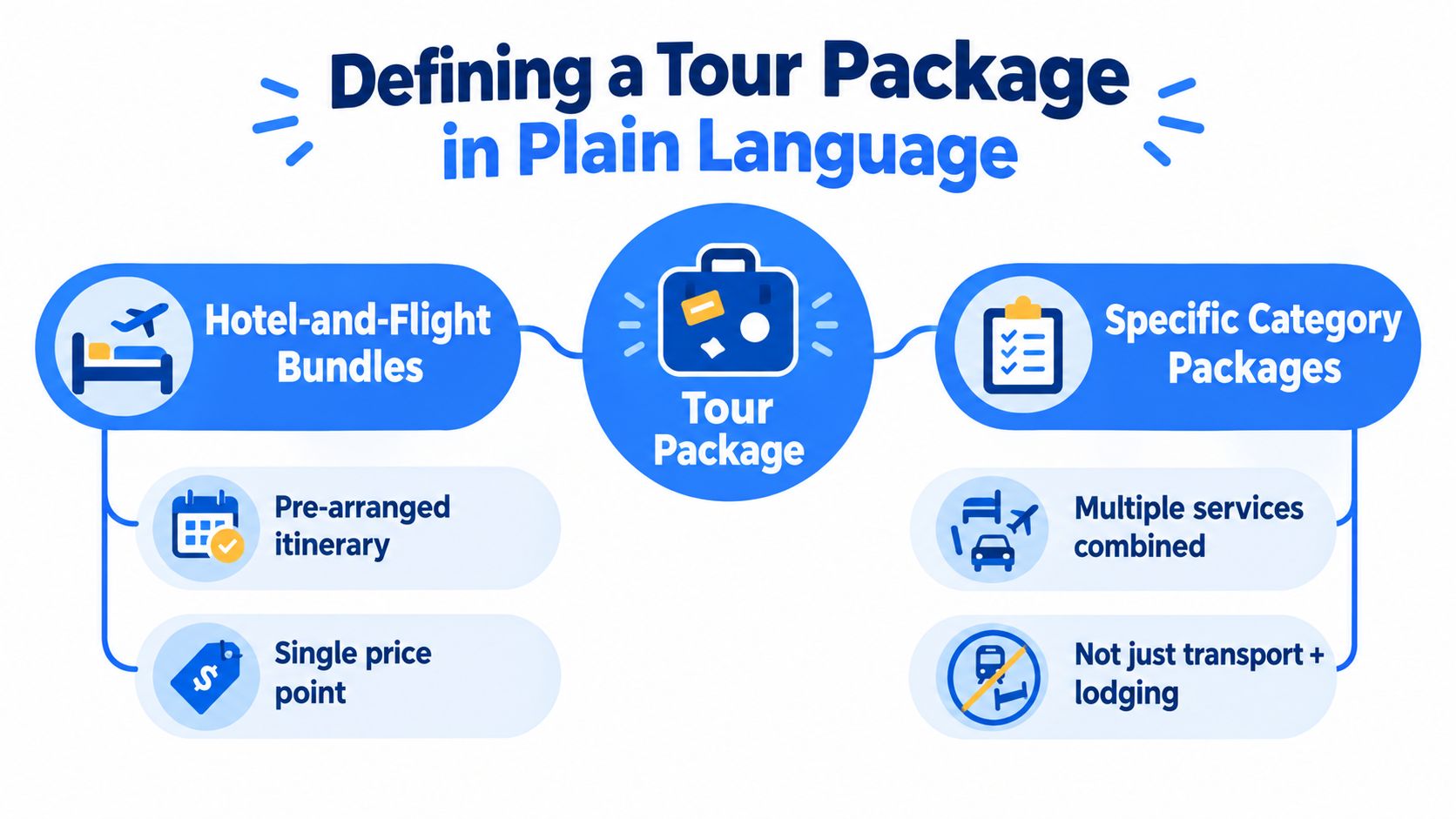
So a hotel and flight aren't automatically a legally protected package just because a website shows them on one itinerary. The relevant questions include whether the services were combined through a single point of sale, whether they were sold at an inclusive price, and whether a traveler entered separate contracts. A platform can also let you choose individual components and still create a package, depending on how it structures the purchase. The European Commission's explanation of package travel rules distinguishes such packages from linked travel arrangements, which can involve separate contracts and more limited protections.
The practical difference is responsibility. If a booking qualifies as a package under the applicable rules, the organizer can be responsible for the proper performance of the services included, even when separate suppliers deliver them. With standalone reservations, you may need to resolve a flight, lodging, or activity problem with each provider independently.
Before paying: Find the named organizer, read the contract, and check whether the booking is described as a package or a linked travel arrangement. Don't rely on the marketing label alone.
How Tour Packages Evolved Into Modern Travel Infrastructure
The package-travel idea predates online booking by a long way. A widely recognized milestone came on July 5, 1841, when Thomas Cook organized a return rail excursion from Leicester to Loughborough in England. The trip covered 22 miles and carried approximately 500 passengers; its organized arrangements included rail travel and group logistics. Historical accounts also report that the ticket cost one shilling and included return travel, tea, and a ham sandwich. Thomas Cook's history describes the excursion that helped establish this model.
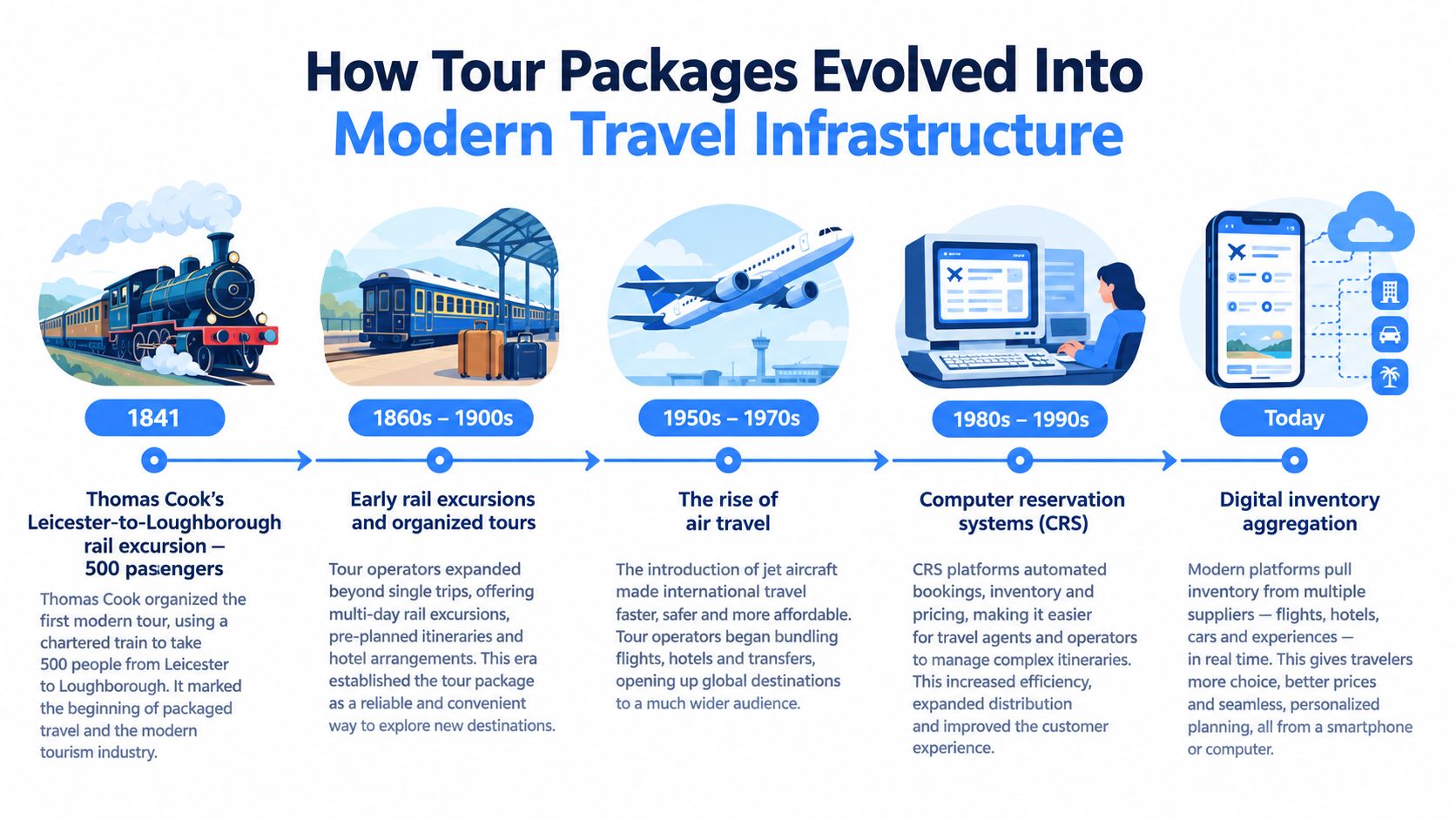
The excursion wasn't an overnight holiday, but it demonstrated the essential commercial idea: coordinate separate pieces of a journey and offer them as one organized experience. Cook later expanded from domestic rail trips to broader UK and European itineraries. Instead of asking each traveler to arrange every detail alone, an organizer could bring fragmented services together under a workable plan.
That logic remains recognizable in modern travel. A trip may involve an airline, hotel, car rental provider, cruise line, vacation-home host, and activity operator. Packaging can coordinate some of those services, while digital platforms can make inventory from multiple suppliers available through one access point. But access to multiple categories doesn't by itself prove that a specific booking is a legally organized package. The contract and checkout structure still matter.
This is why it can be useful to think of modern travel platforms as infrastructure. They may consolidate access and planning across suppliers without necessarily acting as the legal organizer for every combination a traveler builds. For a broader explanation of the systems behind travel services, see this guide to tourism infrastructure.
The Core Components That Make Up a Package
The components in a package aren't just brochure features. They define what the organizer or traveler must coordinate, and what the quoted price covers. A flight and hotel may be the core, while transfers, meals, local transport, and activities could be included, optional, or left for you to arrange.
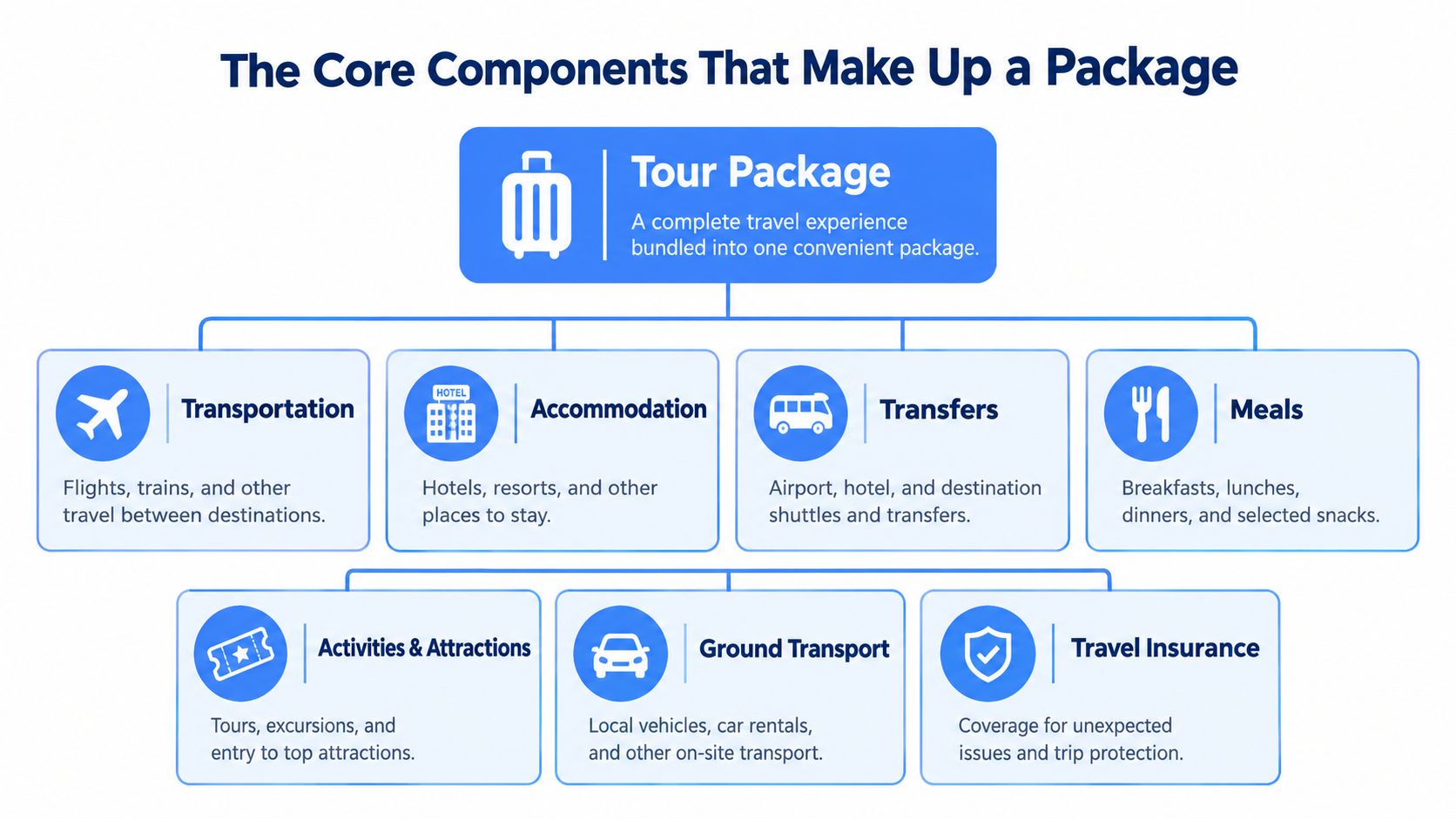
Start by looking beyond the headline price:
- Transportation: Flights, rail, coach, or other passenger transport can get travelers to the destination. Check whether the booking includes the journey to the destination, travel between stops, or both.
- Accommodation: Hotels, resorts, and vacation homes provide the stay. For a family or longer visit, confirm room or property arrangements, kitchen access, and whether the accommodation fits everyone's needs.
- Transfers and ground transport: Airport transfers, car rental, and local transportation can connect the pieces of an itinerary. A package may cover the arrival transfer but leave daily travel to you.
- Meals: Meals might be included, limited to a particular plan, or excluded. Check which meals are covered and whether the arrangement works for your travel party.
- Activities and attractions: Guided tours, attraction admission, and other destination services may form part of the experience. Their role can also matter when determining whether an arrangement qualifies as a package under EU rules.
- Travel insurance: A policy may be offered alongside a trip, but don't assume it's included in the package price or that it covers every disruption. Read its terms separately.
A useful audit is to mark each item as included, optional, or not included. Then ask who confirms each service and who handles changes. A bundled page can make a trip look unified even when suppliers, payments, and cancellation rules remain separate.
When one organizer is responsible for coordinating included services, the traveler may have fewer supplier relationships to manage. That doesn't mean every practical detail disappears: meals, independent excursions, and local transport can still be outside the arrangement. Read the itinerary line by line before comparing prices.
A visual overview of how trip components fit together can also help when reviewing a proposed itinerary:
Comparing the Main Types of Tour Packages
The right format depends less on whether a trip is called a package and more on how much structure you want. Some travelers value a set itinerary and a guide. Others want the main bookings coordinated but prefer to choose their own pace and activities.
Escorted tours typically combine group travel with a guide and a planned itinerary. They can suit travelers who want the route, transport, and activities organized rather than negotiating each detail themselves. The trade-off is that you'll have less say over the schedule.
Independent packages put core services together in advance but leave travelers more room to explore on their own. They may suit couples or families who want the main logistics arranged without joining a group for every activity.
Cruise-plus-land combinations pair a cruise with a stay before or after sailing. This can help coordinate the transition between a port city and the ship, though travelers should check which transfers, lodging, and shore activities are included.
Custom-built packages let travelers select components from available inventory. They can fit a family reunion, a long stay, or a remote-work trip when the traveler needs particular accommodation and transport. Customization doesn't automatically reduce coordination: confirm whether the platform or organizer manages supplier confirmations and changes.
For travelers comparing how a bundled transport service is presented, compare Uptown Rent A Car packages as one example of a package offering. Then compare what each option includes, not just how it is named.
Format | Flexibility | Best For | Coordination Burden |
|---|---|---|---|
Escorted tour | Lower, with a planned itinerary | Travelers who want guided group logistics | Lower for included arrangements; follow the group schedule |
Independent package | Moderate, with some services arranged in advance | Couples or families who want a planned foundation and independent time | Moderate; verify what remains self-managed |
Cruise-plus-land combination | Varies by itinerary and included stays | Cruise travelers adding a city stay before or after sailing | Moderate; confirm transfers and lodging coverage |
Custom-built package | Potentially higher, depending on booking structure | Families, long-stay travelers, and remote workers with specific needs | Varies; check who coordinates supplier changes |
What Legally Makes a Booking a Package
The EU framework helps explain why a package is more than several services on one screen. The exact legal treatment depends on how the booking is put together, but two tests often confuse travelers: the value or importance of an additional tourist service, and whether a short trip includes an overnight stay.
When accommodation is combined with an additional service such as a guided tour or museum admission, that activity doesn't automatically turn the stay into a package. Under EU rules, an additional tourist service generally needs to represent at least 25% of the trip's total value or be an essential feature of the journey. A low-value museum ticket may not qualify if it isn't central to the trip. An experience that's the main reason for traveling may qualify even if its price is below the threshold. The EU guidance for businesses selling package travel explains this distinction.
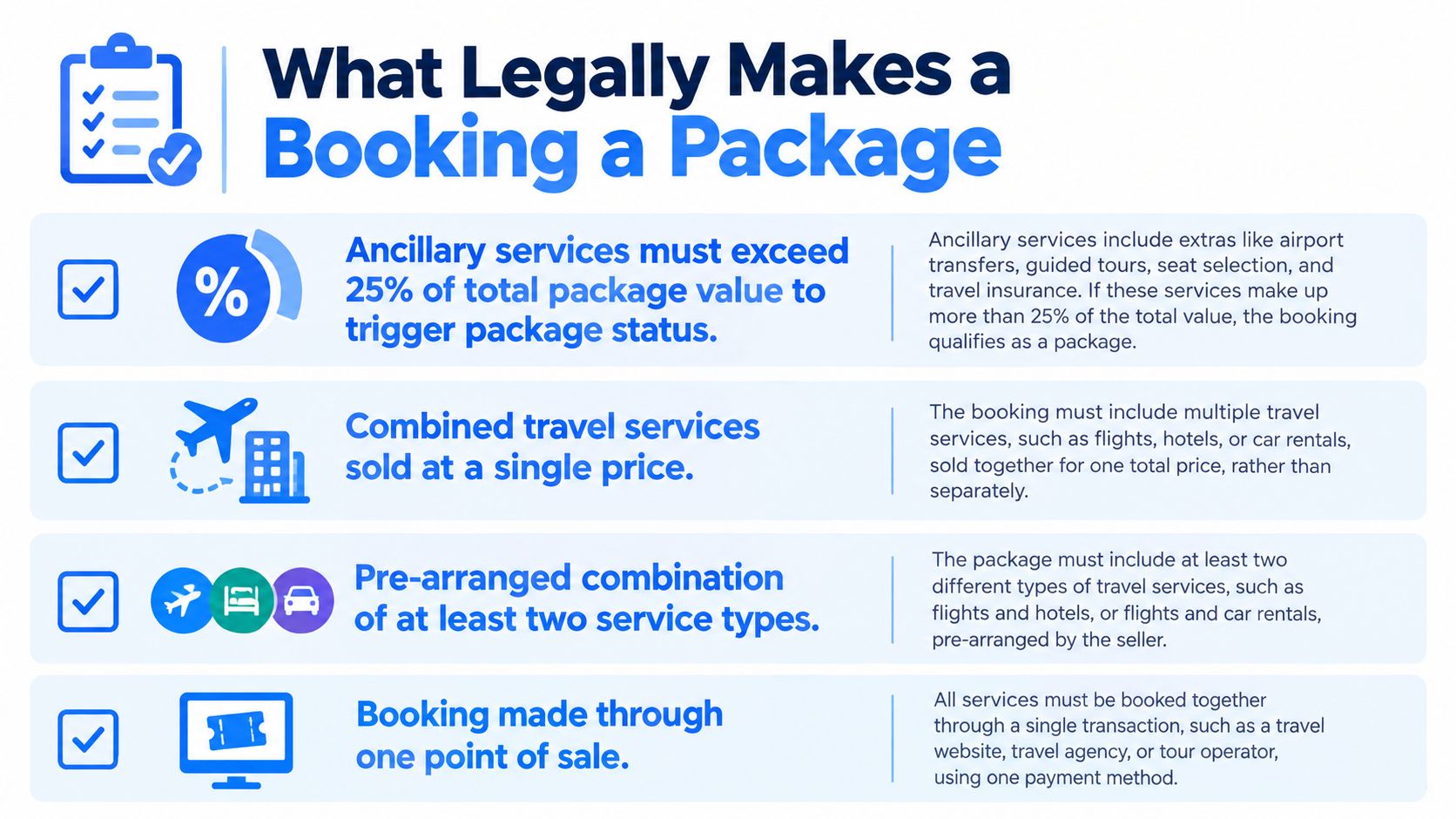
Duration matters too. Arrangements lasting less than 24 hours are generally excluded from the EU directive when they don't include overnight accommodation. A same-day excursion with transport and an activity is therefore treated differently from a trip that includes an overnight stay. The rules also distinguish a package from certain linked travel arrangements, where separate contracts may still qualify for more limited protections under specified booking conditions. The European Parliament's committee document on package-travel rules sets out these boundaries.
For packages covered by EU rules, the organizer is responsible for proper performance of the included travel services, and the framework includes protections related to insolvency, refunds, and repatriation. Travelers may cancel for a reasonable termination fee, while certain unavoidable circumstances can allow cancellation without a fee. The European Commission's report on the Package Travel Directive also describes a right to cancel without a termination fee when a package price increase exceeds 8% of the original price. For example, if the original price is €2,000, an increase above €160 exceeds that threshold.
Before booking, ask:
- Who is the organizer? Look for the named party responsible for the package.
- What does the price include? Separate included services from optional extras and additional charges.
- What happens if plans change? Read cancellation terms and any rules for price changes.
- What financial protection applies? Check for insolvency protection and how refunds or repatriation are handled.
These questions are useful even for a US-based traveler comparing international options. The EU rules don't automatically govern every booking worldwide, but the same information helps you understand the arrangement you're buying.
Who Benefits Most From Packaged Travel
Packaging is most useful when it solves a coordination problem. Consider these representative situations, and ask whether the bundle would put the right services and responsibilities under one arrangement.
A multi-generational family organizer is coordinating relatives across multiple rooms or properties. A custom-built trip could bring accommodation and transport into a common plan, while leaving the organizer responsible for confirming family-specific needs such as accessible rooms or shared activities. If everyone is booking separately, one late change can require several follow-up conversations. For more on the practical side of coordinating shared trips, see this guide to the benefits of group travel.
A snowbird or long-stay retiree needs a condo-style weekly stay, not just a hotel for a short visit. Packaging can help coordinate lodging and transport, but the traveler should confirm kitchen access, length-of-stay terms, and whether local transportation is included. A package doesn't guarantee the accommodation will suit an extended stay.
An existing timeshare owner may have a week they can't use. A package won't by itself convert ownership into travel credits or rental income, so the owner needs to check the rules of any separate exchange, deposit, or rental program before counting that week as part of a trip budget.
A remote worker wants a vacation home with a kitchen and workspace alongside the transport needed to reach it. The operational question isn't just whether the lodging is included. It's whether the property suits working hours and whether changing dates would affect the other components.
A cruise enthusiast might want to compare lines and add a city stay before sailing. A cruise-plus-land arrangement can help coordinate that transition, but the traveler should check which lodging and transfers are covered and whether activities are booked independently.
In each case, packaging can reduce the work of reconciling suppliers, but a more integrated booking may also leave travelers relying on the organizer's change and cancellation processes. Decide which responsibility you want to hand off and which parts of the trip you want to control.
How Wholesale Inventory and Member Features Fit Together
Inventory access and legal package status answer different questions. Inventory access tells you what services a platform makes available. Package status depends on how specific services are combined and sold. A platform can consolidate flights, lodging, cruises, rentals, and activities without making every selection a single legally protected package.
Approved Traveler is an annual travel membership that consolidates access to 1,000,000+ hotels, 700+ airlines, 44+ cruise lines with 30,000+ itineraries, 30,000+ car rental locations, 500,000+ vacation homes, 5,500+ tour packages, and 150,000+ activities in one platform, with up to 10 household members per account. The inventory span can help a household compare different kinds of trips in one place, but each booking still needs to be checked for its organizer, contract, and included services.
Membership features play different operational roles:
- Household access allows up to 10 members per account. That may suit a family sharing trip planning, but it doesn't mean a group booking is automatically one package.
- Reward Credits accrue on bookings and never expire, according to the membership terms. They're a loyalty feature, not a substitute for checking the package price or contract.
- Boomerang Member Share lets the primary member earn Reward Credits on eligible hotel and car bookings made by shared family and friends. That feature relates to account sharing, not organizer responsibility.
- The 110% Best Value Guarantee applies when a member finds a lower publicly available price, with a refund equal to 110% of the difference, under the program's terms. That guarantee is separate from package-travel protections.
- V.O.I.C.E. is a timeshare-owner program described as allowing eligible owners to deposit up to 5 weeks per year for credits, exchange weeks at no fee, or list weeks on a peer-to-peer rental marketplace. Owners should check program terms before relying on these options.
The distinction is useful when comparing travel booking platforms: a single interface can make it easier to find and manage inventory, while the legal treatment of a booking still depends on how the transaction is structured. Check the terms for each trip rather than assuming that access to several categories consolidates every supplier's obligations.
Choosing the Right Package for Your Next Trip
A package isn't automatically restrictive or expensive. The question is whether its structure solves your actual problem: coordinating a household, arranging a long stay, connecting a cruise with lodging, or reducing separate supplier conversations.
Before booking, confirm who the organizer is, what the inclusive price covers, what remains optional, and how cancellation and financial protection work. If an activity is central to your trip, check whether it changes the package classification. For an activity-led itinerary, practical planning also means checking details such as what's included and how the operator runs the experience. For example, travelers can review this guide on how to choose a snorkel crew.
If you're comparing ways to bring lodging, transport, cruises, and activities into one planning environment, Approved Experiences Traveler provides access to those inventory categories through one membership platform. Review the terms for each booking, then compare the package structure with the amount of coordination you want to handle yourself.
Updated