Cruise Planning Websites Compared: 7 Tools for 2026
Compare 7 cruise planning websites by booking model, itinerary coverage, and fit for repeat cruisers, families, and long-stay planners in 2026.
Travel13 min read

You've got a sailing in mind, three tabs open, and cabin prices that don't match from one tab to the next. One site shows a fare without the charges another site adds later. A second site can't book the cabin you've just spent twenty minutes comparing.
That's why this list sorts cruise planning websites by job, not popularity. Some are built for research, some for fare tracking, some for direct booking, some for human planning, and one for wholesale access across cruises, hotels, air, and cars. For each one, you'll see whether it books the sailing, where the reservation is completed, and who it's meant for, whether that's repeat cruisers, families coordinating several cabins, or long stay planners building a trip around a departure.
Online channels now handle a majority of distribution, with a market estimate placing online booking at 59.1% of global cruise market transactions. Treat that figure as a market research benchmark, not an audited census. The practical point still stands. The website you choose shapes your total cost, your service contact, and your options if plans change.
1. Approved Traveler
The screenshot below shows the membership entry point for this consolidated platform.
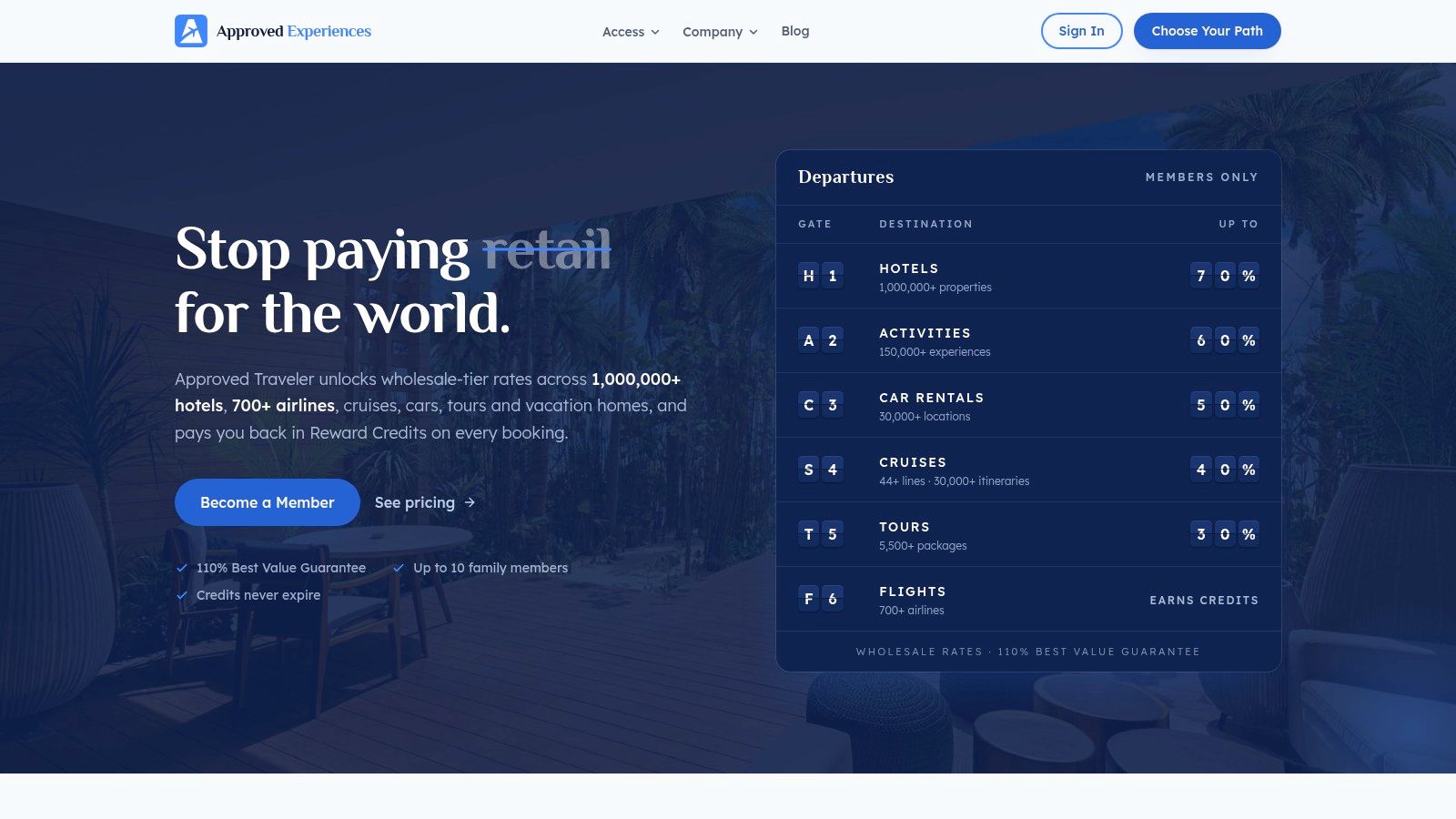
Approved Experiences Traveler is an annual travel membership that consolidates wholesale inventory into one platform, so the cruise is one component you book alongside the hotel the night before embarkation, the flight to the port, and the rental car after disembarkation. That breadth matters because most cruise friction lives outside the sailing itself.
The published membership terms list a Traveler tier at $899 per year, with access advertised at 1,000,000+ hotels, 700+ airlines, 44+ cruise lines, and 30,000+ cruise itineraries, plus rental cars, vacation homes, tours, and activities. Treat those as the provider's own published figures and verify them against current terms before joining. For a repeat cruiser, that breadth replaces separate line websites, each with different cabin taxonomies, fare rules, and ancillary processes.
What Consolidation Changes in Practice
Take a multigenerational sailing. CLIA's 2025 industry report says 31% of cruise travelers sail with three to five generations, yet most sites organize around ship and fare, not around linked cabins, mobility needs, dining coordination, and documents for ten people. The membership terms allow households of up to 10 members with full benefit parity and no per person fees, so grandparents, parents, and adult children plan under one membership instead of maintaining separate accounts.
- Reward Credits: The published terms describe credits earned on bookings, redeemable toward eligible future bookings and the annual renewal. The terms state the credits do not expire, but confirm which bookings qualify and how redemption works before counting on them.
- 110% Best Value Guarantee: The terms describe a guarantee covering 110% of the difference when you find a qualifying lower price. "Qualifying" carries conditions, so check what counts as a lower fare, how the claim process works, and any listed exclusions before relying on it.
- Where the reservation completes: Bookings finish inside the platform instead of passing you to a cruise line or outside agency, which keeps your service contact and payment in one place across trip components.
Practical rule: Don't judge this platform on one sailing. Add up a year of cruises, pre cruise hotels, flights, and cars for your household, then compare that total against the annual fee.
The trade off is a real upfront commitment. Value depends on how much inventory your household uses across the year, and pricing and availability still vary by booking, so compare the specific sailing before paying the fee. Approved Experiences Traveler fits repeat cruisers, household organizers, and long stay planners who want one infrastructure for the whole trip over a one off search.
2. Cruise Critic
Start here when you don't yet know which ship you want. Cruise Critic is a research first site for comparing cruise lines, ships, ports, and itineraries before you pick a booking provider. It combines editorial guidance, traveler reviews, forums, listings, and price alerts in one place.
The useful workflow is narrow and specific. Search listings by destination, departure port, and cruise line, then read ship reviews and forum threads about the exact issues that don't show up in a fare table, such as noise under a pool deck, tender reliability at a port, or how a dining room handles a large party. Roll Calls connect you with people on your sailing, which can help with shared transfers or independent excursions.
Where the Booking Actually Happens
Cruise Critic generally doesn't complete your reservation. Listings may direct you to a cruise line or travel agency partner to book, so your contract, cancellation terms, and service contact sit with that provider. Set a daily Price Alert for a selected sailing and cabin type while you decide, but verify inclusions with the booking provider before paying.
- Strengths: Broad cruise specific research, community detail beyond fares, and alerts for a chosen sailing.
- Limits: Bookings finish elsewhere, and forum posts don't replace checking current policies and inclusions.
- Best fit: First time cruisers shortlisting ships, and repeat cruisers vetting a ship they haven't sailed.
Use it to eliminate the wrong ships early. Don't use a favorable review average as a substitute for reading recent reviews from travelers with needs similar to yours.
3. CruisePlum
CruisePlum sits firmly on the research side of the decision chain. It is a fare search and comparison tool for supported ocean cruise lines, built around detailed filters and pricing history, and it never touches your money. You find the sailing here, then book it with the cruise line or a travel agent, so your payment, cancellation terms, and service relationship stay with whichever provider takes the reservation.
The site's real advantage is showing what a cabin costs across dates. Filters cover departure window, ports, cruise length, cabin type, and passenger count, and results display the total cabin price with mandatory taxes and fees included. Listings also surface recent fare changes and historical pricing, which is exactly what you need when testing whether shifting a departure by a week changes the balcony math. Smaller aggregator tools adjust their feature sets without much notice, so confirm the current search options on the site before building a routine around them.
That total price view matters because headline fares hide exposure, and ancillary charges are not always itemized in initial results. Build a total trip cost before you commit: fare, taxes, port fees, gratuities, transfers, excursions, and internet.
Run your comparison on the total for the cabin your household will actually occupy, not the lead price for the smallest interior on the ship.
Coverage is limited to the lines the site supports, and any fare you see should be re-verified with the booking provider before you pay, since aggregated prices can lag. The best fit is a flexible-date traveler or a repeat cruiser who enjoys running the numbers. Travelers who want one site to search, book, and service the whole trip need a different tool for that job.
4. Cruiseline.com
The image below shows the discovery interface where search sits alongside community content.
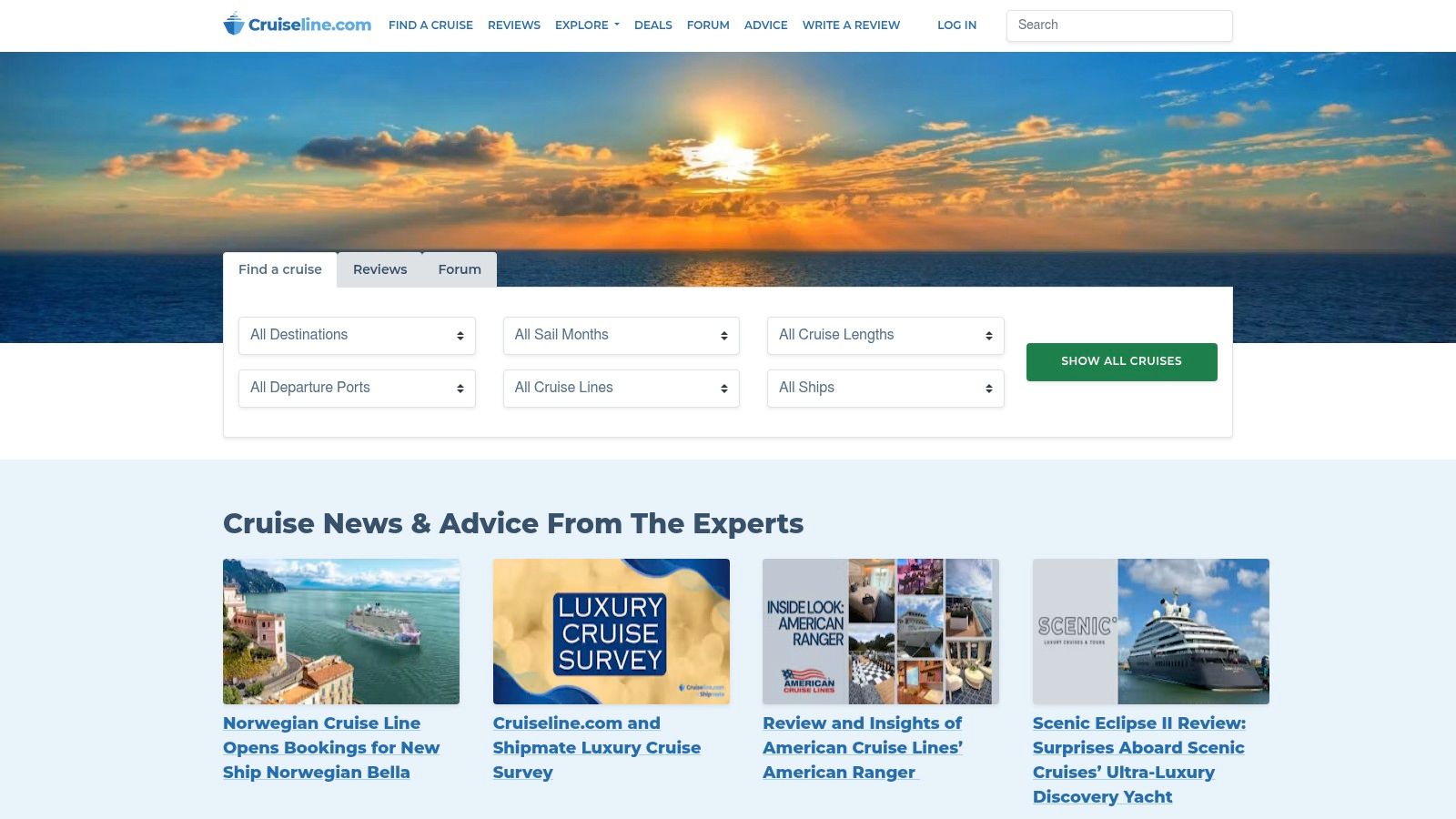
Cruiseline.com blends itinerary discovery with peer evidence. You search by destination, departure port, cruise line, or ship, filter by ship size and price, then check reviews and traveler uploaded photos for the specific vessel. The site offers Sail Scores and reviews it describes as verified against actual sailings, which is more useful than anonymous commentary with no sailing attached.
Its model assumes you research here and complete the purchase elsewhere. In 2024, 50.8% of more than 7,000 surveyed cruise travelers preferred booking directly with a cruise line online or by telephone, according to Cruiseline.com and Shipmate. Cruiseline.com occupies the research half of that decision, letting you vet the ship first and check prices through agency partners when you're ready.
Review depth varies with member activity, so heavily sailed ships carry far more firsthand material than newer or less traveled vessels.
Using Reviews Without Being Misled by Them
- Filter by ship, not just line: Two ships from the same line can deliver very different experiences for mobility, noise, and children's programming.
- Join the Roll Call: Passengers on your exact departure often share embarkation timing, port logistics, and independent tour coordination.
- Treat scores as context: Sail Scores summarize other travelers' priorities, which may not match yours.
Booking is completed through a partner, so confirm which company will service changes or cancellations. Browsing and much of the community content are free. It fits travelers who want firsthand photos and sailing specific discussion before they hand the reservation to a line or agency.
5. CruiseDirect
When you've picked the sailing and want to reserve it, CruiseDirect is structured for that step. It's a cruise focused booking agency, not a broad travel marketplace. Search runs by cruise line, ship, destination, departure port, month, or date range, and support is available by phone, live chat, and email.
The payment structure follows the cruise line model. You pay a deposit, then settle the balance by the cruise line's deadline. That sequencing makes timing important, so read guidance on the best time to book cruises before you lock a cabin category you may later want to change. Multiple cabin bookings are possible, with adviser assistance recommended for groups that need cabins near each other.
Check the Guarantee Before You Rely on It
The site describes a fare guarantee, but it has specific eligibility requirements and exclusions. Items such as air, insurance, onboard credit, taxes, and fees fall outside it, and timing rules apply. Screenshot the comparable fare, note the cabin category and inclusions, and confirm eligibility before you assume a difference will be honored.
Flights, hotels, and other land arrangements may need to be booked separately, which adds coordination if you're flying into the port. For a straightforward two person sailing from a drive to port, that limitation barely matters. For a fly cruise with a pre stay and transfers, you'll manage those pieces elsewhere. It fits decisive bookers who value cruise specialization and human support channels over consolidated trip assembly.
6. Costco Travel
The screenshot below shows the member cruise search where included extras appear on qualifying sailings.
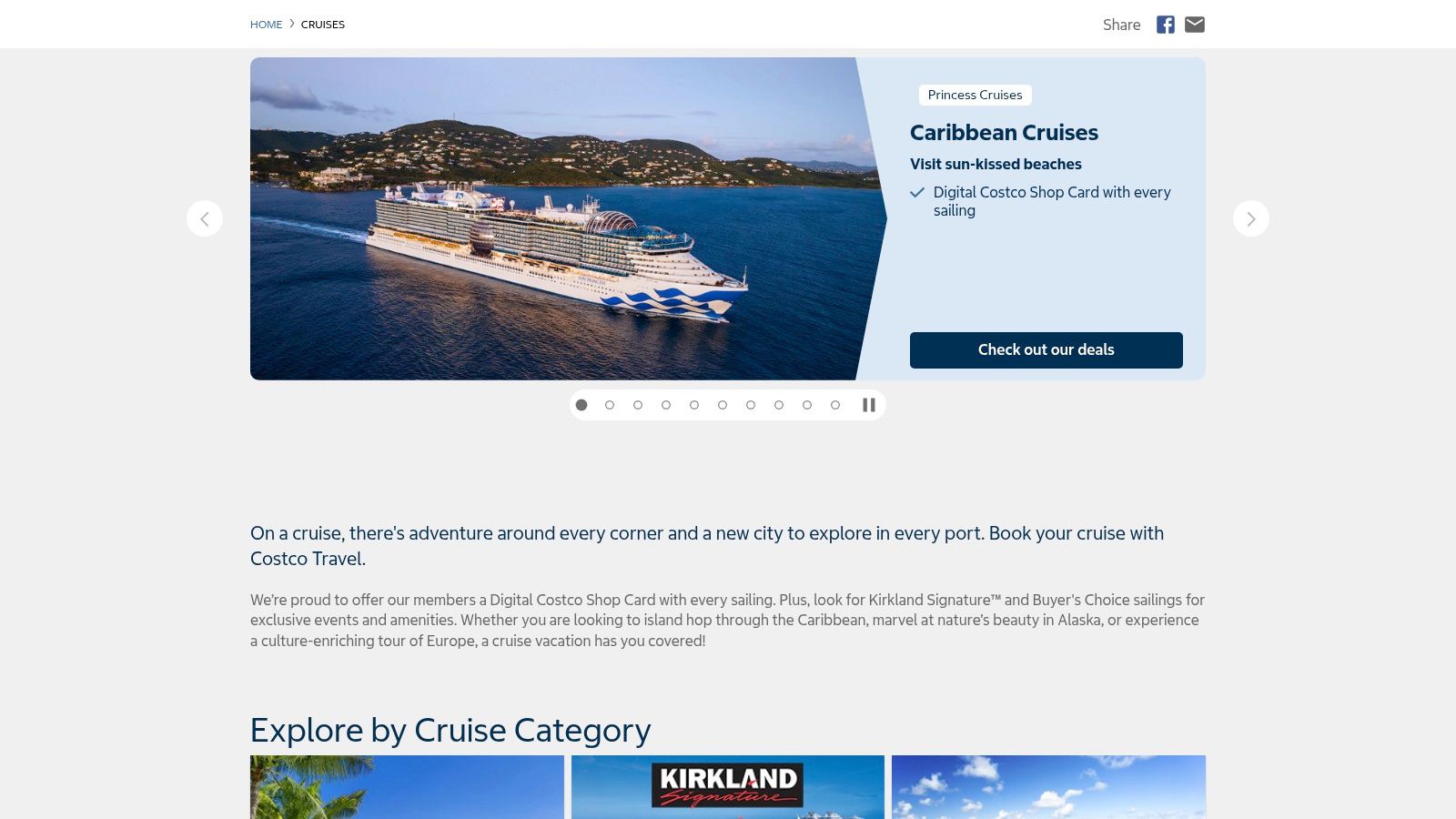
Costco Travel cruises serves eligible Costco members who prefer booking through a retailer they already use. Search runs by cruise line, destination, and departure port, and some sailings include a Digital Costco Shop Card or other amenities. Qualifying Executive Members may earn an annual 2% reward on Costco Travel purchases, subject to terms stated by Costco.
Evaluate the extras as part of total cost, not as a headline. A shop card has value if your household already spends at Costco, but it isn't cash toward port fees or excursions. Compare the sailing against other channels using the approach in this guide to saving money on cruises, then confirm which add ons, such as specialty dining or beverage packages, still need to be handled directly with the cruise line.
- Strengths: Familiar membership retailer, extras displayed on qualifying sailings, and cruise tours including Alaska, Europe, and Uniworld river options.
- Limits: Costco membership is required, selection and extras vary by sailing, and some reservations stay with the cruise line.
- Best fit: Existing members taking mainstream itineraries who'll use the included extras.
If you aren't already a member, factor that membership cost and your actual warehouse spending into the comparison. The channel works best when the cruise is an extension of an existing relationship, not the sole reason to join.
7. Cruise Planners
The image below shows the advisor network's planning entry point for cruises and land trips.
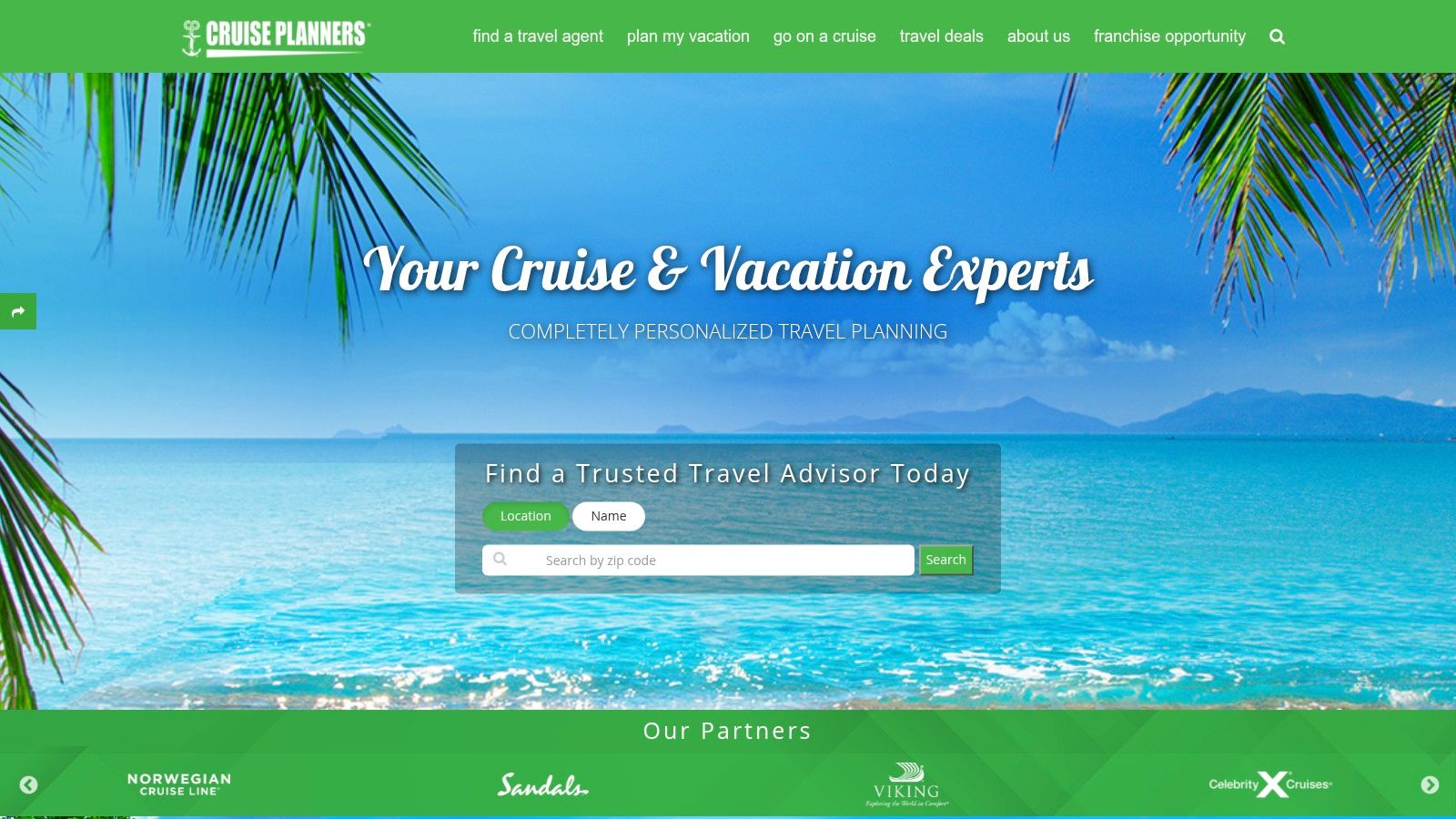
Cruise Planners is a U.S. travel advisor network, so the product is a person, not a search interface. Advisors help with itinerary selection and booking for cruises, land tours, and custom packages, including reunions, destination weddings, clubs, and multigenerational vacations. That human layer still has a real audience, as Cruiseline.com and Shipmate's 2025 Member Survey found 14% of surveyed cruise travelers preferred booking through a travel agency website.
For a group organizer, the value is coordination. One advisor can link cabins across separate bookings, sequence dining, and keep payment deadlines visible so one family member isn't chasing everyone. Walking through steps for planning a cruise vacation with your advisor gives you a shared checklist for passports, transfers, insurance, and onboard accounts.
Ask first: Does your advisor charge a service fee, how fast do they respond during disruption, and who covers your trip if they're unavailable?
No standard planning fee is published on the company's general site, so ask directly. The company states that it is licensed, bonded, and insured, and lists CLIA and ASTA memberships, but individual advisor experience and responsiveness vary. Travel protection products are available through the agency, and cruise supplier policies still apply. It fits complex groups and travelers who don't want a fully self service booking experience.
How the seven cruise planning websites differ on booking model, core strength, and best fit
Item | Books the Reservation | Core Strength | Best Fit |
|---|---|---|---|
Approved Traveler | Yes, through its travel marketplace | Broad travel inventory and household membership benefits | Travelers who want to consolidate bookings across travel types |
Cruise Critic | Usually through a cruise line or travel partner | Cruise research, reviews, forums, and price alerts | Travelers researching ships and sailings before booking |
CruisePlum | No; book with a cruise line or travel agent | Detailed fare comparisons and historical pricing | Flexible-date travelers comparing cruise fares |
Cruiseline.com | Through agency partners | Itinerary discovery, traveler reviews, and sailing Roll Calls | Travelers who value peer insights and community |
CruiseDirect | Yes | Cruise-focused search, booking, and customer support | Travelers ready to reserve a cruise online |
Costco Travel | Yes, for eligible Costco members | Cruise bookings with select member extras | Costco members comparing cruises and included benefits |
Cruise Planners | Yes, with advisor assistance | Personalized cruise and group-trip planning | Groups or travelers who want human planning support |
Matching Each Cruise Planning Website to How You Actually Travel
No single site covers every stage well, and forcing one tool through the whole decision chain creates avoidable problems. Use Cruise Critic or Cruiseline.com to shortlist ships and read sailing specific evidence. Use CruisePlum when dates are flexible and you need total cabin pricing across several departures. Move to CruiseDirect, Costco Travel, a cruise line, or a Cruise Planners advisor when you're ready to reserve and you know who will service the booking.
Mobile access belongs in that decision, because planning doesn't end at checkout. One industry estimate reports 23% of cruise bookings were made through mobile channels in 2024, while another estimates mobile represented 38% of online cruise reservations in 2025. The definitions differ, so don't treat the figures as directly comparable. Do test whether you can retrieve cabin details, payment schedules, embarkation information, and excursion confirmations on your phone under poor connectivity.
Run These Checks Before Any Payment
- Total cost: Confirm fare, taxes, port fees, gratuities, booking fees, and cancellation charges in one number for your actual cabin and passenger count.
- Service owner: Identify whether the cruise line, an agency partner, or an advisor handles changes, and save that contact with your confirmation.
- Package status: If flights or accommodation are bundled, ask whether the purchase is a package, because refund frameworks can differ.
That last check carries legal weight on European itineraries. Under EU Regulation 1177/2010 on the rights of passengers travelling by sea and inland waterway, a carrier that cancels a departure or expects a delay of more than 90 minutes must offer rerouting at no extra cost or reimbursement of the ticket price, with reimbursement paid within seven days. The rule applies to passenger services embarking from a port in an EU member state, and to EU-operated services arriving at one, with exemptions for small vessels and certain excursion or sightseeing trips. Check whether your sailing falls inside that scope before counting on it. Separate rules apply to bundles: under the EU Package Travel Directive an organizer cancelling a package must refund payments within 14 days after the contract ends. If you cancel independently, you're not automatically entitled to a refund. Your fare terms govern the outcome.
For a practical example, compare two Mediterranean sailings with similar itineraries but different embarkation ports. Note whether each port is in the EU, who sells the ticket, and whether your flight and hotel are inside the same contract. Those three facts change your remedy if the sailing is cancelled.
Repeat cruisers face a different calculation. If you book several sailings, travel with a household of up to 10, or regularly add hotels, flights, and cars around departures, compare the annual cost of Approved Experiences Traveler against the separate tools and fees it would replace. Consolidation only pays when your travel volume uses the inventory. Whatever channel you choose, confirm the final itinerary, cabin, taxes, and cancellation terms with the booking provider before paying.
If you cruise more than once and keep reassembling flights, port hotels, and cars across separate sites, Approved Experiences Traveler consolidates that work into one membership with access to 44+ cruise lines and 30,000+ itineraries alongside hotels, airlines, and rental cars for households of up to 10. Review the Traveler tier against your next twelve months of sailings and land travel to see whether one platform replaces the separate tools you're using now.
Updated