Costa Rica Travel Packages: A Practical Booking Guide
Plan and book costa rica travel packages with confidence. Compare package types, itineraries, seasonal risk, and how wholesale access consolidates air, lodging
Travel12 min read
A family organizer is comparing a one-week resort package with a three-week stay in a vacation home. The grandparents want easy transfers, the children want wildlife and beaches, and the remote-working adult needs reliable workspace. The advertised inclusions don't answer the key question: will the flights, lodging, ground transport, park access, and entry requirements work together for this particular group?
That's the right way to assess Costa Rica travel packages. Treat the package as operational infrastructure, not just a hotel bundle. The best structure depends on who's traveling, how long they'll stay, where they'll arrive, and how much schedule flexibility they can tolerate.
Why Costa Rica Packages Need an Operational Lens
Consider a multigenerational family deciding between a seven-day all-inclusive stay and a 21-day vacation-home plan. The resort option might simplify meals and keep the group in one place. The longer stay could offer a kitchen, separate bedrooms, and room for a slower pace, but it also demands decisions about airport transfers, daily transportation, activities, and how often the family changes regions.
Those are different products, even if both are advertised as Costa Rica packages. A beach resort near Liberia may suit a family prioritizing Guanacaste beaches, while a plan arriving through San José might make more sense for travelers connecting to the Central Valley or other inland destinations. Costa Rica's two international arrival corridors are operationally important: in July 2024, Juan Santamaría International Airport near San José handled 162,543 air arrivals, while Daniel Oduber International Airport in Liberia handled 76,779 (Costa Rica's 2024 tourism statistics).
Park access also needs to be explicit. A tour description may mention a national park without clarifying whether admission is included, whether a guide is part of the price, or whether the activity depends on weather. Families should check those details before comparing package totals.
Practical rule: Choose the itinerary structure first, then compare package prices. A low-friction plan with fewer transfers can serve a family better than a packed itinerary that looks more inclusive.
Costa Rica's tourism model developed around connected nature destinations, lodging, transport, and guided activities, not just a single hotel base. Historical research documents the growth of arrivals and tourism revenue alongside the expansion of protected areas and visits to protected forests (research on Costa Rica's ecotourism development). For buyers, the practical lesson is simple: judge a package by how well its moving parts fit together.
The Five Package Types and What They Actually Include
Start by identifying what kind of product you're comparing. A hotel bundle, a guided circuit, and a long-stay home can all be called Costa Rica travel packages, but their inclusions and responsibilities differ.
- Lodging-only bundles usually combine a hotel or resort stay, sometimes with breakfast or another meal plan. Flights, airport transfers, park admission, and excursions may remain separate. This structure works for travelers who want a fixed base and are comfortable arranging daily activities themselves.
- Lodging plus transfers adds airport pickup and sometimes transport between properties. Check whether transfers are private or shared, whether they cover the airport you'll use, and whether the itinerary includes waiting time or a stop en route. Park tickets and optional activities may still be excluded.
- Fully guided escorted tours coordinate lodging, scheduled transport, guides, and a set route. They suit travelers who value hands-off logistics, but the pace and activity choices are less flexible. Confirm whether park admission, meals, tips, and any internal flights are covered rather than assuming “fully guided” means every cost is included.
- Custom-built itineraries combine selected hotels or homes, transfers, and activities around the traveler's preferred pace. They can fit families with different mobility needs or travelers who want to stay within one region. Ask for a line-item breakdown so optional excursions, guide services, and conservation-area admission don't disappear inside a vague total.
- Long-stay condo or vacation-home arrangements prioritize kitchen facilities, laundry, workspace, and fewer property changes. These can make sense for remote workers, retirees, and larger households, but the buyer may need to coordinate car rental, local transport, and activities independently.
Compare packages by separating what's included from what you'll still have to arrange. This guide to comparing vacation packages with separate bookings can help you assess whether bundled components reduce coordination or just make the quote harder to interpret.
Sample Itineraries by Stay Length and Traveler Segment
An itinerary should match the length of the stay. A week is usually a reason to focus on one or two connected zones, not an invitation to cross the country every other day. A longer trip gives travelers more room to combine regions, but only if transfer days and weather flexibility are built into the plan.
Stay length | Target segment | Primary zone | Transfer days | Park access pattern |
|---|---|---|---|---|
7 days | Multigenerational family organizer | Central Valley and Arenal area, or Guanacaste | One arrival transfer and one return transfer; keep other travel local | Choose a nearby protected area and confirm whether admission and guiding are included |
14 days | Frequent leisure couple | Central Valley, then one coast or inland region | Allow a dedicated day for each major repositioning | Combine conservation areas within the selected region rather than chasing distant parks |
30–90 days | Remote worker or snowbird retiree | One home base, with regional stays as an option | Schedule occasional repositioning, not constant hotel changes | Plan visits around the home base, with flexible dates for weather-sensitive activities |
For a seven-day first visit, a family might arrive in San José, transfer to an inland base, and spend the rest of the week on nearby wildlife and nature activities. A group whose priority is beach time could instead use Liberia as the arrival gateway and remain in Guanacaste. The trade-off is clear: choose a region and get more time at the destination.
A 14-day plan can support a regional change, such as combining an inland nature base with a Pacific stay. Keep the move between regions as its own travel day. Don't schedule a timed park visit immediately after a long ground transfer.
For a 30- to 90-day stay, a condo or vacation home can reduce the burden of repeated check-ins. Remote workers should verify workspace and connectivity with the property; retirees should prioritize transport access and everyday services. Travelers weighing independent routing can use this Costa Rica backpacking itinerary resource as a prompt to think carefully about distance and sequencing, then build a package that fits their comfort level.
Seasonal Risk and How It Reshapes the Package
Dry-season and green-season packages call for different operating assumptions. The dry season runs from mid-December through late April, while the green season lasts from May through mid-December. Costa Rica's Pacific and Caribbean coasts don't follow identical rainfall patterns, so a countrywide “dry season” label isn't enough to assess a specific beach itinerary (Costa Rica's official guide to when to visit).
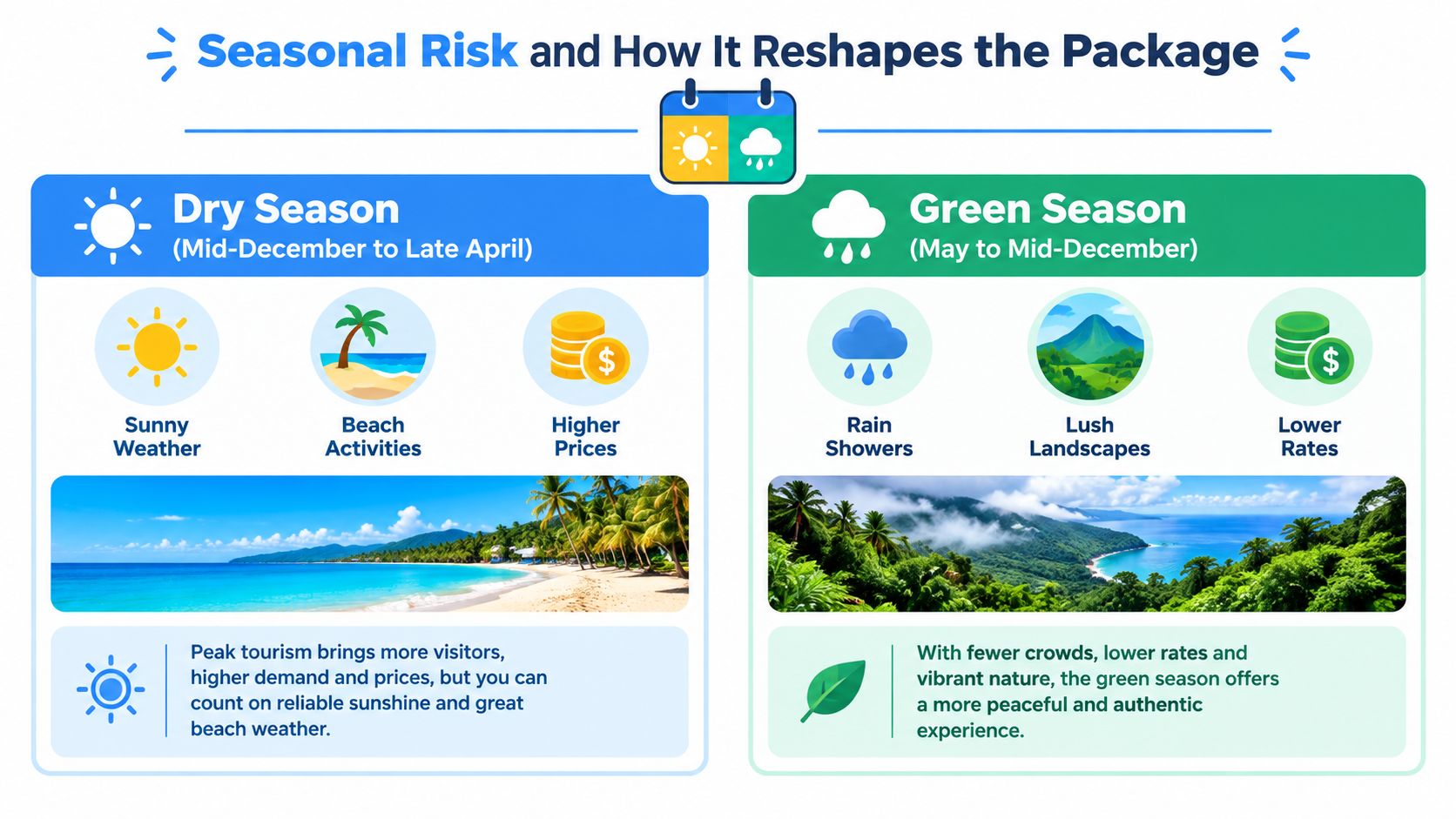
During the dry season, Pacific beach itineraries are a natural fit for travelers who prioritize predictable beach conditions. The trade-off is peak demand, so book lodging and activities with a clear understanding of cancellation terms and park access. For retirees or families who prefer less movement, a single coastal base can keep ground logistics manageable.
The green season can suit travelers who value lush scenery and flexible nature outings. But heavy rain from approximately mid-May through November can bring flooding, landslides, road closures, and damage to infrastructure. The Canadian government also identifies November–May and July–August as peak tourist periods, so seasonal planning isn't merely a choice between crowded and uncrowded dates (Canadian travel advice for Costa Rica).
A Guanacaste beach plan and a Puerto Viejo stay shouldn't be judged by the same weather assumption. Compare the package's actual regions, roads, and activity cancellation rules. If an itinerary combines distant inland stops during the rainy period, ask for schedule buffers and avoid consecutive fixed activities that depend on long transfers.
A travel adviser can also compare the proposed dates against the tourism authority's recurring arrival reports, then use that information alongside regional weather planning (Costa Rica's official tourism arrival statistics). The operational test isn't whether a package promises many stops. It's whether the route still works if rain changes the day's plan.
Pre-Booking Checklist for Entry, Tariffs, and Refundability
Don't pay a deposit until the travel documents, park charges, and cancellation terms fit the trip. Entry requirements vary by nationality and authorized stay, so a package seller's itinerary isn't a substitute for checking the rules that apply to each traveler.
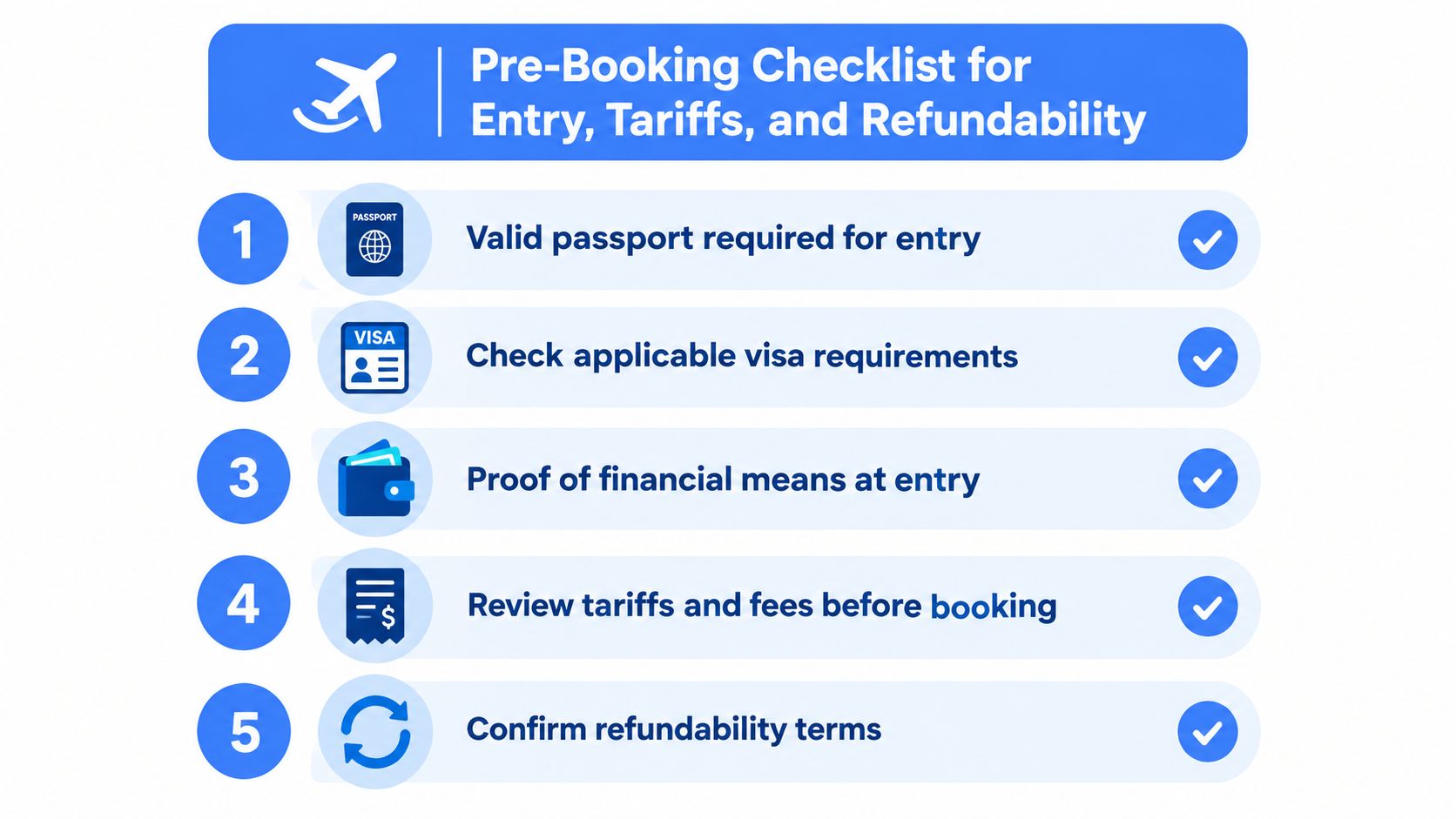
Use this checklist before booking:
- Confirm travel documents: Each visitor needs a valid passport or travel document and a visa when applicable. Check the nationality-specific rules through Costa Rica's official entry requirements.
- Plan for financial evidence and departure: Official rules call for proof of financial means of at least US$100 per month or partial month of legal stay, plus a return ticket or onward-travel plan. A two-month itinerary needs a permitted stay aligning with the intended dates.
- Check the authorized stay: The permitted period depends on the visitor's nationality group. Some travelers may receive up to 180 calendar days, while other groups may receive up to 30 days, with different extension rules. Verify each traveler's situation before committing to a long stay.
- Ask what park fees cover: Request a breakdown of transportation, guide services, and conservation-area admission. Fees and child categories can vary by park and visitor type. For example, the official tariff document lists a US$5 admission charge for nonresident children aged 2 to under 12 at Carara National Park (SINAC's protected-area tariff document).
- Read the cancellation terms: Check refundable dates for lodging, transfers, and activities separately. A package can have different cancellation rules for each component.
A short stay may need a simple arrival-and-departure plan. For a 30- or 90-day itinerary, confirm the permitted stay and onward travel before booking, then ask how weekly lodging and transfer changes are handled. This guide to travel cancellation insurance can help you assess how insurance fits alongside supplier cancellation policies.
How Approved Traveler Consolidates the Booking Layer
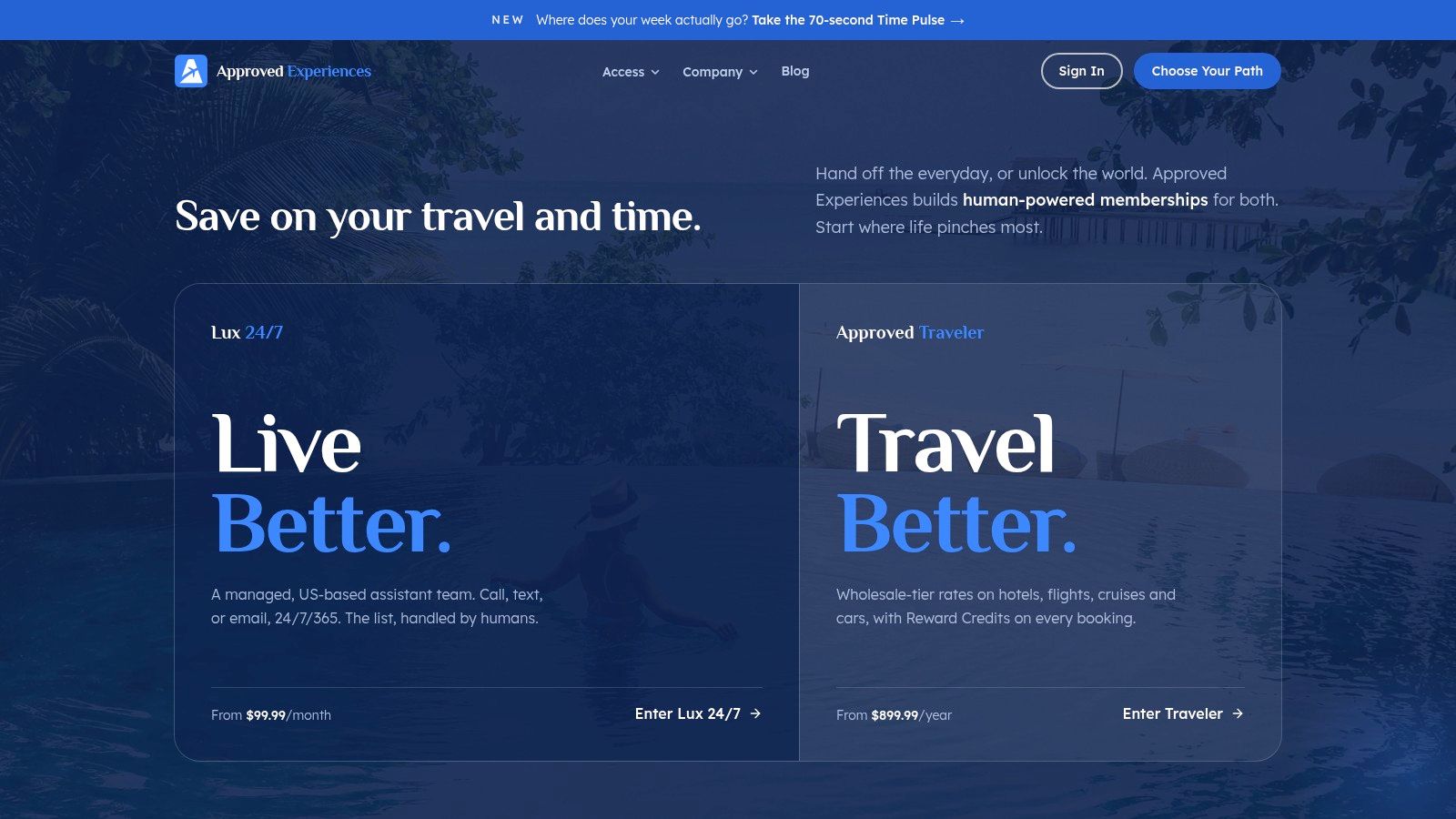
Once the itinerary is clear, the next task is managing its inventory. Approved Traveler is an annual travel membership that brings wholesale-rate access to hotels, airlines, cruise lines, car rentals, vacation homes, tours, and activities into one platform. For a Costa Rica trip, that means you can evaluate lodging, flights, a rental car, and excursions within one booking environment rather than coordinating each category through unrelated platforms.
The marketplace includes 1,000,000+ hotels, 700+ airlines, 44+ cruise lines, 30,000+ car rental locations, 500,000+ vacation homes, 5,500+ tour packages, and 150,000+ activities. That breadth matters when the same household is considering different formats: a resort-based week, a two-region trip, or a longer vacation-home stay. The point is to compare components against one another and consolidate booking work, not to treat every inclusion as automatically useful.
Approved Traveler has two membership tiers. Traveler costs $899 per year and provides marketplace access; Lux Traveler costs $1,799 per year and adds the Approved Lux 24/7 Personal Assistant. Both cover up to 10 household members, which can help a family organizer coordinate travel for relatives under one membership. The Approved Lux 24/7 Personal Assistant is for logistics support, not a replacement for checking each hotel's, airline's, or tour operator's terms.
The family-scale model also includes Boomerang Member Share. When shared family or friends book eligible hotels or car rentals, the primary member earns Reward Credits. That can be relevant when relatives book their own rooms or transport for a shared trip, but it doesn't remove the need to confirm that everyone's dates and transfers align.
Approved Traveler is one possible consolidation layer among the ways a traveler can assemble a package. Compare its inventory and terms with your existing booking options, then decide whether a single access layer simplifies the particular Costa Rica itinerary you're building.
Reward Credits, the 110% Best Value Guarantee, and Value Discipline
More inclusions don't automatically make a package better. A 12-item itinerary can look efficient on paper, yet create extra transfer days, rushed park visits, and more coordination for the person managing the trip. A slower plan with one home base and carefully chosen activities may fit a family better, even if it includes fewer headline excursions.
Reward Credits are earned on every booking, don't expire, and can be applied to future bookings, maintenance fees, resort usage fees, annual renewal, and eligible eGift cards. The program provides another way to evaluate the booking layer over time, particularly for households that travel together or share eligible bookings through Boomerang Member Share. The value of credits depends on redemption terms, so don't treat them as a fixed cash amount when comparing package quotes.
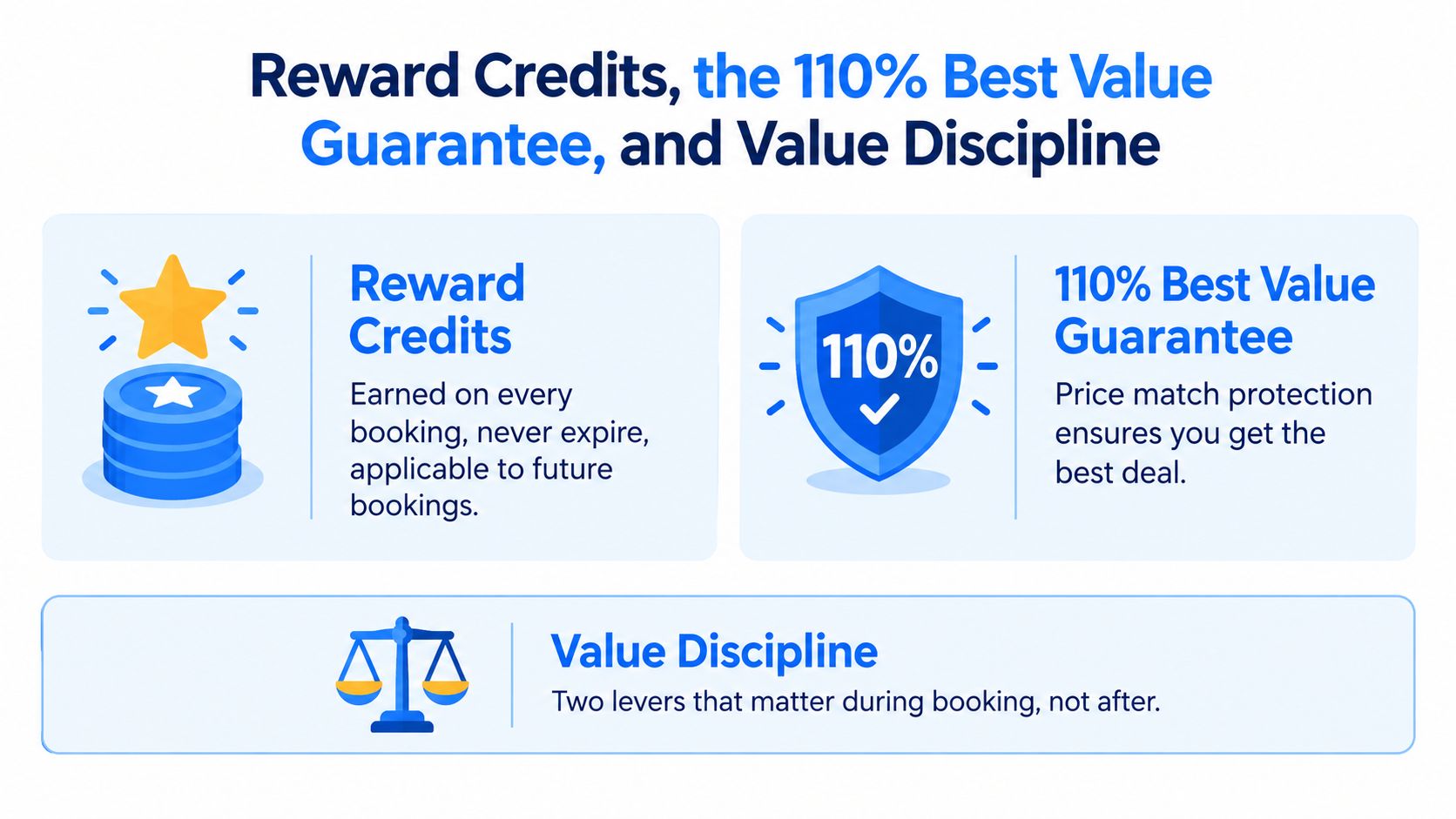
The 110% Best Value Guarantee applies when a member finds a lower publicly available price: the refund equals 110% of the difference. Treat that as a comparison mechanism, not a reason to skip the details. Confirm that the competing offer is publicly available and that the booking conditions, dates, room type, and included services match.
A useful comparison looks beyond the headline total. For a family, count the transfer days and account for the time required to move children and older relatives between properties. For a long stay, compare the value of a vacation home's kitchen and workspace with a string of hotel stays. Then consider whether fewer changes and a more flexible activity schedule make the trip easier to run.
Value discipline: Compare the itinerary's total coordination burden, not just how many components the seller includes.
Using V.O.I.C.E. for Long Stays and Liquidity
For a snowbird, retiree, or timeshare owner, Costa Rica may be a stay-length problem rather than a week-away problem. A condo-style base can work better than repeated hotel changes, but existing timeshare owners may also have unused weeks that could contribute to the travel plan.
V.O.I.C.E. gives timeshare owners three ways to work with eligible weeks: deposit up to 5 weeks per year for credits, exchange weeks at no fee, or list weeks on a peer-to-peer rental marketplace with no listing fee. Each option addresses a different constraint. A deposit can turn an unused week into credits, an exchange can redirect a stay, and a rental listing can put an unused week in front of potential renters.
Before relying on any option, review the applicable program terms and the dates, property, and booking conditions tied to your timeshare. Then compare the resulting stay or credits with the vacation-home inventory and dates needed for Costa Rica. The aim is to make existing travel ownership usable within a broader itinerary, not to assume that every deposited week will match the trip you want.
Build the plan in the right order
Use this working checklist before paying:
- Pick the stay length. Decide whether you're planning a week, a regional trip, or a long stay.
- Pick the season. Match your priorities to the seasonal and regional conditions.
- Pick the zone. Choose the arrival airport and destination area before selecting daily activities.
- Confirm entry rules and park tariffs. Check each traveler's documents, permitted stay, onward travel, and admission responsibilities.
- Build the transfer plan. Mark arrival, departure, and regional travel days, then leave room for weather-sensitive activities.
- Evaluate the booking layer. Compare separate suppliers with an aggregated wholesale inventory option, and assess Reward Credits and the 110% Best Value Guarantee as guardrails.
A Costa Rica travel package works when flights, lodging, transfers, and conservation-area access fit the travelers and the conditions. Start by choosing your stay length and destination zone, then compare the booking components and their terms through Approved Experiences Traveler.
Updated