Home Maintenance Schedule Checklist: 8 Tasks by Frequency
Plan household upkeep with this home maintenance schedule checklist: 8 weekly, monthly, seasonal, and annual tasks, plus tips for delegating each one.
15 min read
You're clearing dinner dishes when you notice a damp patch beneath the kitchen sink. Tomorrow is packed with meetings, school pickup, and an appointment nobody remembered to put on the shared calendar. You wipe it up, promise to investigate over the weekend, and close the cabinet.
That's how home upkeep breaks down. A water heater rarely fails on a convenient day, and a postponed inspection can leave a household dealing with repairs when it has the least capacity to manage them. The problem isn't always willingness. It's that nobody owns the next step.
A home maintenance schedule checklist turns good intentions into assigned work. These eight tasks are grouped by weekly, monthly, quarterly, seasonal, and annual frequency, with practical time commitments and clear delegation boundaries. Treat the cadence as a starting point, then adjust it for your equipment manuals, local weather, and anything you discover.
The financial pressure is real. In a 2025 survey of 2,000 U.S. homeowners reported by This Old House, 73% said maintenance costs had increased during the preceding three years.
Start with water, safety, and equipment reliability, not cosmetic projects. Tracking drainage and roof conditions can help you avoid costly roof repairs, while a shared calendar keeps routine work from becoming another parent's invisible second shift.
1. Weekly Leak and Water-Damage Walk-Through
Time commitment: A brief walk-through attached to trash day or weekly planning. Failure to prevent: An unnoticed drip soaking cabinets, flooring, or the ceiling below.
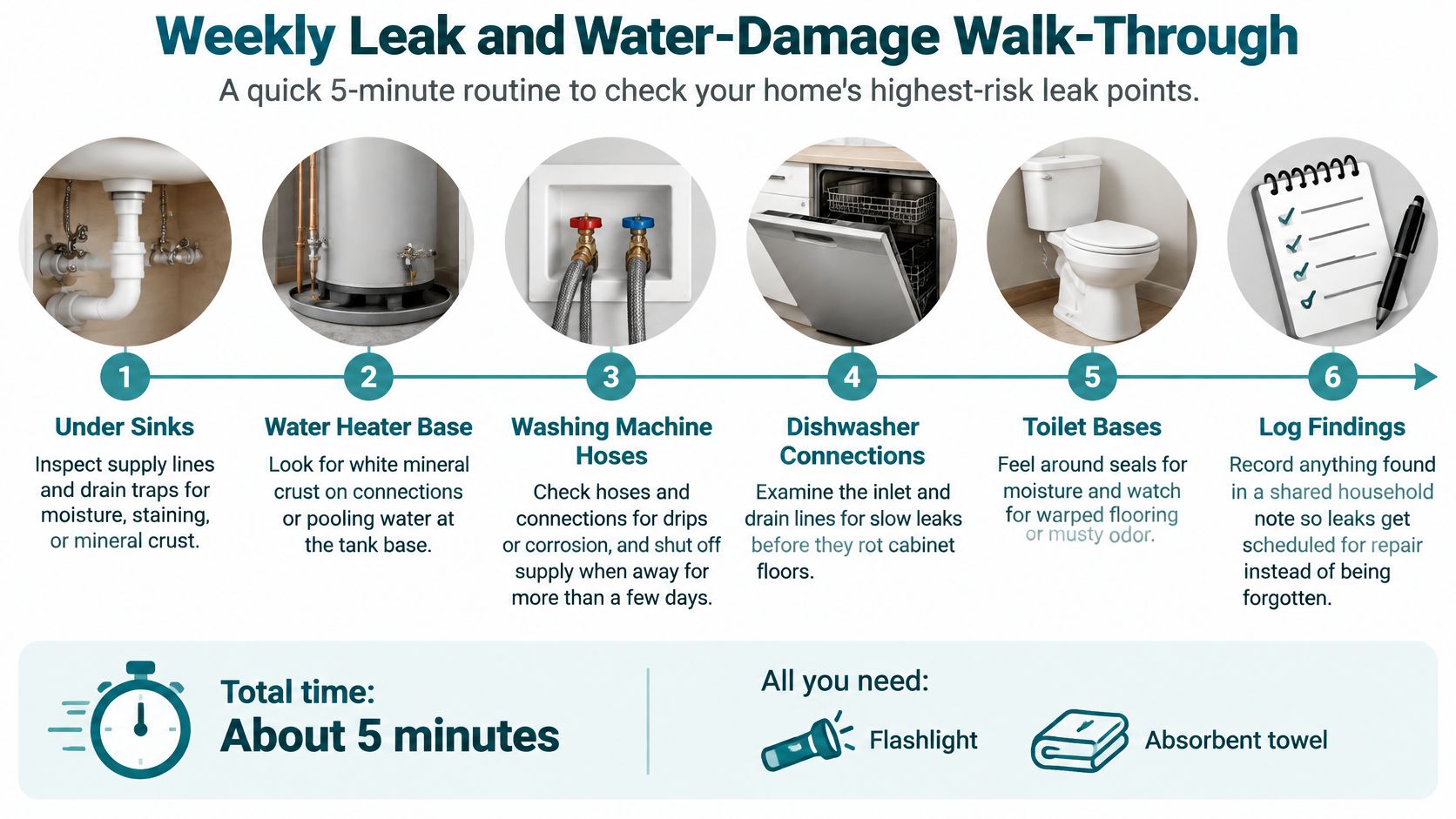
Open the sink cabinets rather than glancing at the doors. Use a flashlight to inspect supply connections, drain traps, and cabinet corners, then check around toilet bases, washing machine hoses, accessible dishwasher connections, and the water heater.
Look for dampness, swelling, rust trails, and white mineral deposits. A dry stain belongs in the log for comparison; fresh moisture needs investigation rather than another reminder.
Follow a Repeatable Route
- Start under sinks: Pass a dry paper towel beneath accessible joints to reveal moisture. Don't tighten fittings blindly, especially plastic drain connections.
- Check appliances: Look for cracked washer hoses, wet flooring, and corrosion around water-heater connections. Don't pull heavy appliances out alone.
- Record the finding: Photograph the location and describe whether it's wet now, stained, or changing.
- Escalate active leaks: Stop using the affected fixture and isolate its supply if you can do so safely. Keep away from water near electrical equipment.
Say both parents assume the other checks the bathroom. Adding the route to a shared household chores list for adults gives it a named owner instead of leaving it to whoever notices first.
Delegate the coordination: The Assistant team can send the reminder, collect your photos, and arrange a plumber. Someone physically present still performs the inspection.
Place leak sensors beside vulnerable equipment without obstructing ventilation or access. Before an extended trip, consider closing the washing machine's supply valves, provided they're accessible and operate normally. Don't force a seized valve on departure morning.
2. Monthly HVAC Filter Replacement
Time commitment: A short inspection and, when needed, a straightforward swap. Failure to prevent: Restricted airflow and avoidable strain on heating and cooling equipment.
Inspect monthly; replace according to condition and equipment requirements. The heading is a useful calendar reminder, not a rule to discard every filter regardless of its design.
An Oak Ridge National Laboratory report found monthly replacement was the optimum schedule examined for military housing, but the cost-savings difference versus other schedules was slight. The practical reason to maintain filters is dependable airflow and equipment protection, not a promised utility-bill reduction.
Make the Correct Filter Easy to Find
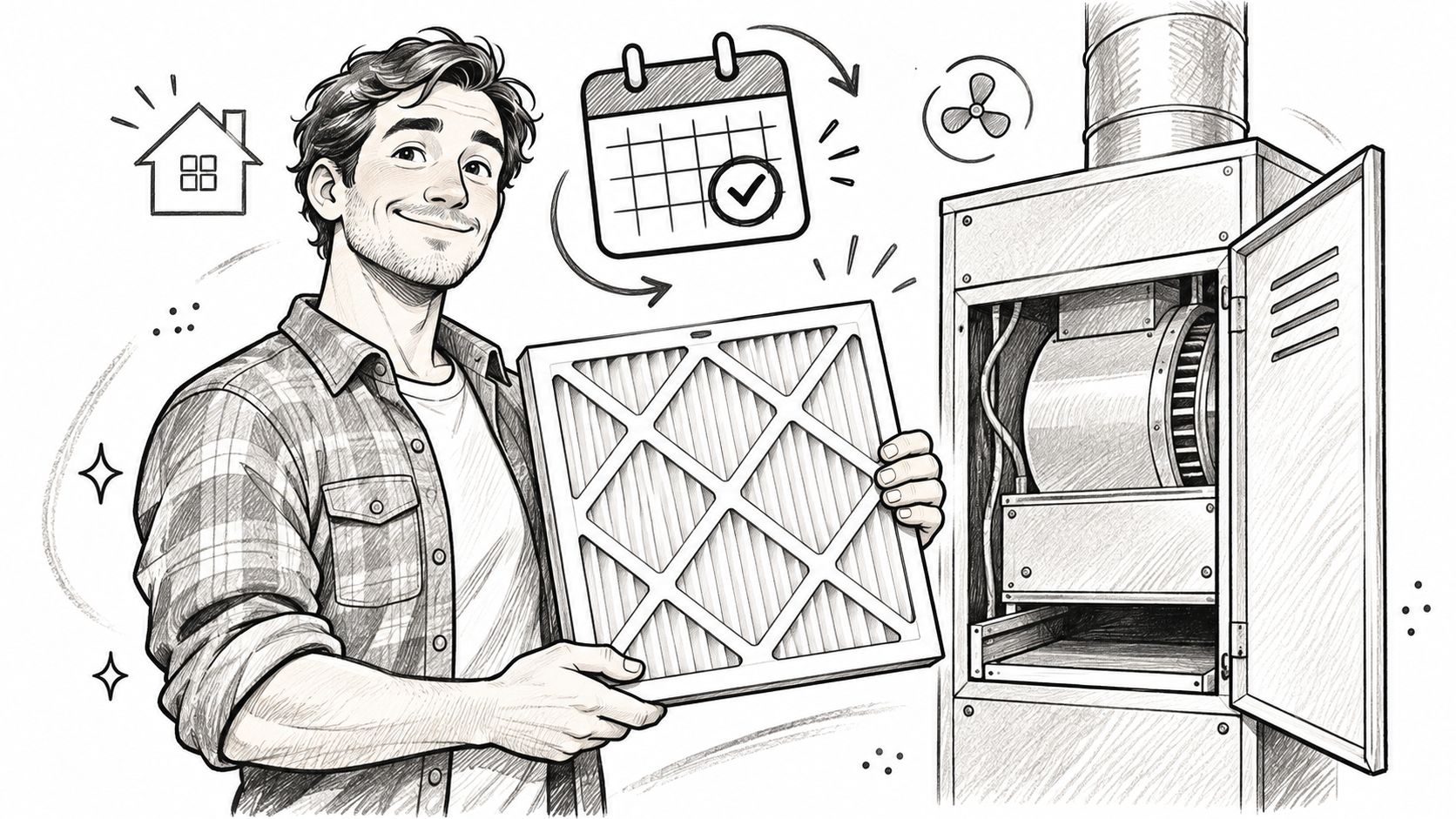
Record the dimensions, approved efficiency rating, equipment model, and filter location in the shared maintenance file. Keep a matching card inside the utility closet, away from hot surfaces or electrical components.
Turn the system off before opening the filter compartment. Match the new filter's airflow arrow to the equipment's marked direction, seat it securely, and close the access panel before restarting.
- Check actual loading: Pet hair, renovation dust, and heavy seasonal use can change replacement needs.
- Avoid unsupported upgrades: A higher MERV rating isn't automatically better for equipment that can't accommodate the added resistance.
- Watch for symptoms: Icing, weak airflow, unusual noise, or repeated rapid loading warrants professional attention.
For example, a household with dogs might discover that its usual replacement interval leaves the filter heavily loaded during cooling season. Keep the monthly inspection and shorten replacement timing based on the manual and observed condition.
Delegate purchasing and records: The Assistant team can research matching replacements, coordinate ordering, and record installation dates. The household member doing the swap confirms fit and condition.
3. Monthly Smoke and Carbon Monoxide Detector Test
Time commitment: A short room-to-room test, with extra time reserved for troubleshooting. Failure to prevent: Discovering a failed or expired alarm during an emergency.
An alarm mounted on the ceiling isn't proof that it works. Put testing on the shared calendar and follow each model's instructions, including any requirements that call for more frequent attention.
The Nationwide 2024 homeowner survey found that 80% of respondents reported inspecting smoke detectors. That describes reported behavior, not a guarantee that devices were tested correctly or replaced when due.
Record More Than a Checkmark
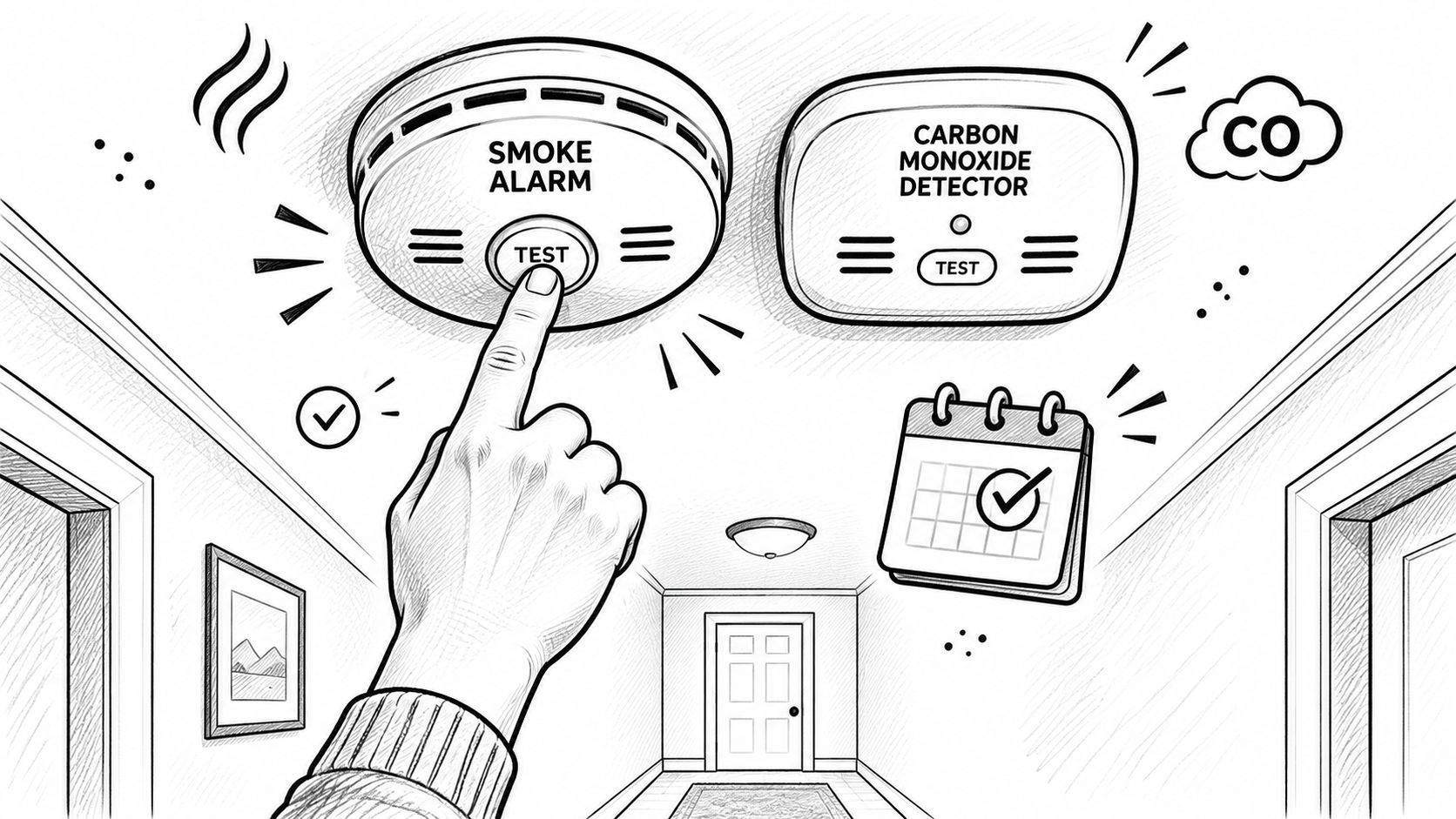
Use the test button as directed, warn everyone before starting, and confirm interconnected alarms respond as their instructions specify. Don't use an open flame or vehicle exhaust to test a device.
- Identify every unit: Log its room, model, power source, and manufacture or installation date.
- Check replacement information: Note the manufacturer's end-of-life guidance and any displayed warning.
- Stock compatible batteries: Use the specified type where batteries are replaceable. Don't try to open sealed battery compartments.
- Review placement: Confirm coverage near sleeping areas and across the home against the installation instructions and applicable local requirements.
A family might discover that the hallway CO alarm still sounds during testing but has reached its replacement date. The correct follow-up is replacement, not assuming an audible test overrides the device's service-life limit.
Safety boundary: A maintenance test isn't an emergency response. If an alarm sounds unexpectedly, follow its emergency instructions and leave the home when indicated.
Delegate the follow-through: The Assistant team can maintain reminders and replacement records, research compatible devices, and schedule qualified installation. A person in the home must perform and confirm the test.
4. Quarterly Sump Pump and GFCI Outlet Testing
Time commitment: A dedicated household systems check, with troubleshooting kept separate. Failures to prevent: A pump that won't run when water rises and an outlet that won't provide its intended ground-fault protection.
Use the quarterly calendar entry to review both systems, but don't let that replace more frequent testing specified by their manufacturers. Add a sump-pump check before forecast heavy rain.
For a sump pump, inspect the accessible basin, float, power connection, and discharge route. Following the manual, add water to trigger operation and observe whether the pump starts, discharges, and stops normally. Don't reach into energized equipment or open electrical components.
For GFCI outlets, use the built-in TEST and RESET buttons according to the instructions. Alert the household first because protected downstream outlets may also lose power.
Separate a Failed Test From a Repair
- Pump won't activate: Arrange service rather than repeatedly manipulating the float or bypassing controls.
- Discharge looks obstructed: Have the route cleared and confirm it directs water away from the foundation.
- GFCI won't trip or reset: Stop using the affected receptacle and arrange an electrician's assessment.
- Backup system is uncertain: Include checking sump pump backup power in the inspection, using the battery and charger manufacturer's procedure.
For example, a homeowner might find that stored boxes restrict access to the sump basin. Clearing access makes future checks easier, but a sticking float still needs attention before the next storm.
Delegate scheduling, not electrical work: Send the Assistant team the failed test, equipment photos, and access constraints. We can coordinate repair appointments and resolve calendar conflicts while you retain decisions about repairs and spending.
Label protected outlets once their circuit relationships are confirmed. That prevents a future reset problem from becoming a house-wide search.
5. Seasonal Gutter and Downspout Cleaning
Time commitment: A weather-dependent exterior job, or a brief coordination task when hiring a service. Failure to prevent: Roof runoff overflowing against siding, fascia, or the foundation.
Schedule cleaning around leaf fall and the local rainy season, not dates copied from another climate. Wooded lots, roof valleys, and frequent storms may require additional inspections.
The Hippo 2025 extreme-weather survey found that only 32% of respondents felt confident preparing for extreme weather. A useful response is to make drainage checks weather-triggered as well as seasonal.
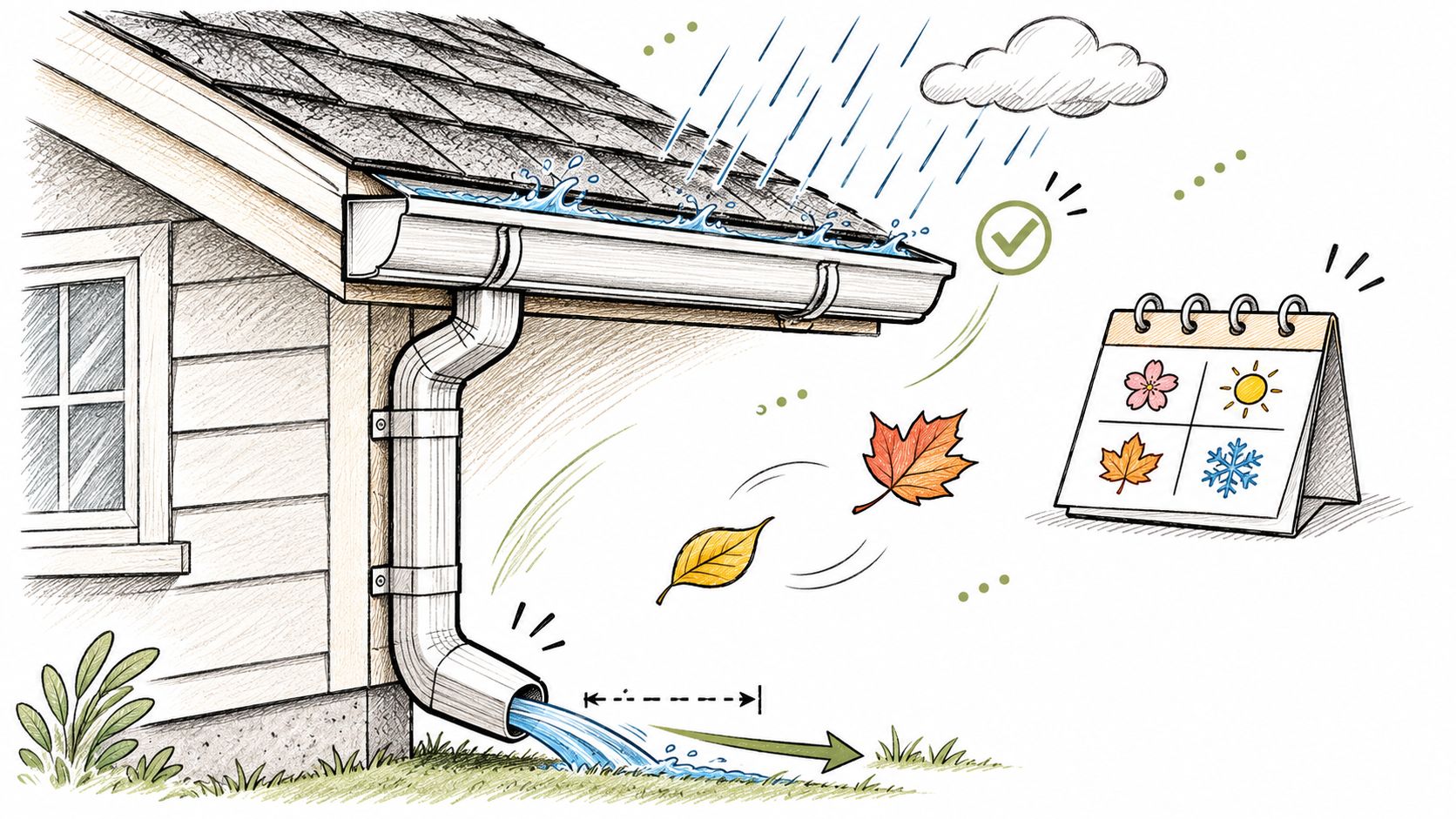
Inspect the Whole Water Route
Removing leaves is only part of the job. After clearing the gutters, have the provider flush the downspouts and confirm where the water exits.
- Check connections: Look for detached elbows, leaking joints, sagging sections, and loose brackets.
- Document condition: Request before-and-after photos, including areas you can't inspect from the ground.
- Review roof debris: Ask about unusual shingle granule accumulation rather than diagnosing roof condition from gutter debris alone.
- Keep guards on the schedule: Gutter guards don't eliminate the need to inspect for needles, nests, or blocked openings.
For example, a household may pay for gutter cleaning yet still have foundation pooling because a downspout extension was removed during yard work. Specify the discharge check in the booking so the job ends with water moving away from the house.
Don't turn a packed weekend into an unsafe ladder project. Steep roofs, awkward access, damaged gutters, and nearby power lines are reasons to use a qualified service.
Delegate the service cycle: Our household management services include coordinating maintenance and repairs. The Assistant team can compare scopes, arrange access, and collect completion photos; the owner approves roof or drainage repair recommendations.
6. Biannual HVAC Professional Tune-Up
Time commitment: A service appointment plus a short review of the written findings. Failure to prevent: Entering peak heating or cooling season with an unresolved equipment fault.
Book heating and cooling reviews before their respective heavy-use seasons, then adapt the schedule to your system's service requirements. A heat pump, furnace, and separate air conditioner won't necessarily need identical work.
The National Association of Home Builders treats maintenance as recurring work shaped by manufacturer instructions, climate, and completed-work records. That's a better operating model than purchasing a generic tune-up without checking what it includes.
Buy a Defined Inspection
Ask for an equipment-specific scope. Depending on the system, that can include electrical connections, condensate drainage, coils, blower components, burners, venting, and safety controls.
Refrigerant work belongs with an appropriately qualified technician. A visit shouldn't automatically mean adding refrigerant without investigating why the system needs it.
- Verify credentials: Confirm required local licensing and appropriate insurance.
- Compare equivalent work: A lower quote isn't directly comparable if it excludes diagnostics or cleaning included elsewhere.
- Request written findings: Separate immediate safety concerns, recommended repairs, and conditions to monitor.
- Save the report: File it beside equipment details, invoices, and warranty documents.
For example, a technician might identify a deteriorating electrical component during preseason cooling service. The owner's decision is whether to authorize the documented repair, not how to rearrange work and school schedules for the return visit.
Approve technical work from a written finding, not from an unexplained recommendation relayed between appointments.
Delegate the appointment chain: We book, reschedule, and de-conflict home-service appointments. Our home-service scheduling support can coordinate access and collect reports without replacing the licensed technician's judgment or the household owner's approval.
Keep the next service date attached to the completed record so booking doesn't depend on remembering last season.
7. Annual Water Heater Flush
Time commitment: A planned service window with cooling, draining, and refilling time. Failure to prevent: Leaving sediment and related maintenance needs unaddressed.
Use an annual reminder to review the heater's maintenance requirements, then follow its manual. Tank and tankless systems require different procedures, and water conditions or service history may change the appropriate interval.
A flush isn't a cure for a leaking tank, damaged fittings, or unexplained performance problems. If the heater is old, heavily corroded, or has no known service history, have a plumber assess it before attempting a first DIY flush.
Make Safe Shutdown Part of the Job
- Identify the equipment: Save the model, serial number, fuel type, installation date if known, and manual.
- Control heat and energy: Follow the exact shutdown procedure and allow water to cool before draining. Hot discharge can scald.
- Choose a safe drain route: Use a suitable hose and confirm the receiving drain can accept the discharge.
- Restore service correctly: Follow the refill and restart sequence. Never energize an electric tank before it's full.
- Include related maintenance: Ask the plumber to review anode inspection requirements and visible connection condition.
For example, a busy household can book a plumber for the initial service and keep the written procedure with the equipment record. Whether future work stays professional or becomes DIY should depend on access, confidence, and the manufacturer's requirements.
This demonstration can help you understand the work before discussing your own heater's procedure.
Delegate the administrative work: The Assistant team can schedule the plumber, coordinate the hot-water interruption, and file the report. Keep decisions about repairs, anode work, and replacement with the owner, supported by the plumber's findings.
Record recurring symptoms rather than repeating the flush appointment each year.
8. Annual Dryer Vent Professional Cleaning
Time commitment: A professional cleaning appointment, plus routine lint-screen care. Failure to prevent: Restricted exhaust airflow and lint accumulation in the vent route.
Treat annual professional cleaning as a planning baseline, not permission to ignore symptoms until the appointment. Follow the appliance instructions and bring service forward when drying performance changes, the dryer becomes unusually hot, or exhaust appears restricted.
Clean the lint screen after every load. That doesn't replace cleaning the duct, because lint can pass beyond the screen and collect along the exhaust route.
Specify More Than a Brush-Out
A useful service scope includes the transition connection, accessible duct route, exterior termination, and observations about damage or restriction. Ask for written findings, particularly when the duct runs through a concealed or awkward route.
- Inspect the outlet: Check that the exterior flap opens during operation and isn't blocked by debris or nesting material.
- Review duct materials: Use the dryer manufacturer's approved metal ducting rather than improvised plastic or crushed foil connections.
- Keep connections intact: Never operate the dryer with the exhaust disconnected or the lint screen removed.
- Document access problems: Record concealed sections, sharp bends, or damaged connections that need correction rather than ordinary cleaning.
Say laundry that usually dries normally starts needing another cycle. Don't assume heavier loads are the only explanation. Arrange an airflow and vent inspection instead of repeatedly running the dryer longer.
Practical rule: A change in performance moves a task out of its calendar slot and into the repair queue.
Delegate the booking and follow-up: The Assistant team can arrange service around school pickup or working hours, share access instructions, and obtain the report. A household member or authorized service professional handles physical access and confirms the dryer is safely reconnected.
If cleaning doesn't resolve the symptom, arrange appliance diagnosis rather than automatically booking another duct cleaning.
How the eight home maintenance tasks compare by cadence, time, and delegation fit
Read the table as a workload map, not a checklist. The DIY tasks cost minutes. The professional ones cost coordination, which is exactly the part a household owner can hand off while keeping every approval decision.
Item | Frequency | Typical Time | Primary Risk Prevented | Delegation Fit |
|---|---|---|---|---|
Weekly Leak and Water-Damage Walk-Through | Weekly | About 5 minutes | Costly water damage | High: reminders, logging, and plumber booking |
Monthly HVAC Filter Replacement | Every 30–90 days | A few minutes | HVAC strain and reduced indoor air quality | High: reorder, reminders, and tracking |
Monthly Smoke and Carbon Monoxide Detector Test | Monthly | A few minutes per floor | Undetected fire or carbon monoxide danger | High: reminders, test logging, and supply ordering |
Quarterly Sump Pump and GFCI Outlet Testing | Quarterly | Under 15 minutes | Basement flooding and electrical shock | High: scheduling, weather alerts, and repair booking |
Seasonal Gutter and Downspout Cleaning | Twice a year | About half a day or one scheduled service visit | Water intrusion and foundation damage | High: service scheduling and quote comparison |
Biannual HVAC Professional Tune-Up | Twice a year | Roughly two to three hours on site | HVAC breakdowns and inefficiency | High: contractor coordination and recordkeeping |
Annual Water Heater Flush | Annually | Two to three hours, including cool-down | Sediment buildup, inefficiency, and premature tank wear | High: plumber booking and maintenance tracking |
Annual Dryer Vent Professional Cleaning | Annually | One to two hours | Dryer-related fire risk | High: service scheduling and reminders |
The pattern matters more than any single row. The first four tasks are owner-done checks where the Assistant team carries the reminders, the logging, and the supply or repair follow-up. The last four are provider visits where the Assistant team does nearly everything except open the door: comparing quotes, booking around the household's schedule, and filing the service records.
That split is where the trade-off sits. The quick weekly and monthly checks only prevent damage when they happen on time, and they are the easiest tasks to forget precisely because each one takes minutes. The professional visits are hard to forget but tedious to arrange. Delegating the coordination solves both problems: reminders fire before the small tasks slip, and the big appointments get booked, rescheduled, and recorded without the owner chasing contractors. The owner keeps the only part that requires them, approving spending and authorizing access.
Turn the Checklist Into a Delegated Calendar
Start by assigning each task a cadence, physical owner, and coordination owner. Those last roles don't have to belong to the same person. A household member can test alarms while someone else handles reminders, replacement research, and records.
Build the home maintenance schedule checklist in a shared calendar with supporting documents in a shared folder. Every recurring entry should state what completion means, where the relevant equipment is, and what finding requires escalation. A reminder that says “check house” still leaves someone carrying the mental load.
Define the Handoff Before Something Breaks
- Owner handles decisions: Approve spending, choose among repair options, and authorize access.
- Person on-site handles observation: Test devices, inspect accessible areas, and send clear photos.
- Assistant team handles coordination: Research providers, compare appointment scopes, book visits, follow up, and organize records.
- Qualified professional handles technical work: Diagnose faults and perform work requiring specialist skills or credentials.
Approved Lux pairs Assistant team coverage with Triple-channel access, so a Lux Solo member or a Lux Circle household, covering up to 4 people on one account, can manage reminders, bookings, and records by call, text, or email. Real US-based people provide human judgment and shared context, making the service a force multiplier rather than another queue for you to supervise.
We schedule cleaning, maintenance, and repairs, send reminders before deadlines, and de-conflict appointments. We aren't an in-person maintenance service; physical inspections and repairs remain with household members or the people scheduled to perform them.
Give the Calendar Decision Rules
Mark findings as act now, schedule, budget, or monitor. Active leaks, failed safety devices, and electrical concerns shouldn't sit behind routine cleaning because cleaning appeared first on the calendar.
Keep equipment age, service history, and written replacement recommendations together. Use actual quotes when planning future spending instead of an unsupported universal maintenance allowance.
A month-by-month home upkeep checklist can help place seasonal work, but local exposure and equipment instructions should determine the final dates. After severe weather or a failed test, change the schedule rather than waiting for its next recurrence.
During onboarding, share vendor preferences, access standards, and approval boundaries. Proactive Preference Learning lets the team adapt to those routines over time, reducing repeated explanations and operational noise.
The practical payoff is fewer evenings spent chasing appointments and fewer maintenance decisions arriving without context. Put the calendar in place, assign the next action, and keep the owner's attention for decisions that need it.
Approved Lux Personal Assistant offers human Assistant team support for maintenance reminders, vendor research, appointment booking, and follow-up records. Visit Approved Lux Personal Assistant to turn your household checklist into a delegated schedule and reclaim the time you're spending coordinating it.