All Articles
The Journal
Mastering 'tasks of an executive assistant' for Modern Leaders
January 28, 202615 min readexecutive assistant dutieswhat does an ea do
Discover the tasks of an executive assistant and how they streamline scheduling, communications, and core business operations for leaders.

An executive assistant's work is all about giving leaders back their most valuable asset: time. They handle the administrative, operational, and even strategic details that allow executives to stay focused on the big-picture work that drives the business forward. Think of a great EA as a force multiplier—they manage everything from complex travel and scheduling to project coordination and stakeholder communications.
What Does an Executive Assistant Really Do?
Picture your workday as mission control for a high-stakes launch. Your executive assistant is the flight director, seamlessly orchestrating all the moving parts to make sure everything goes off without a hitch. Their job isn't just to manage your calendar; it's to guard your focus, anticipate what you'll need next, and build the operational bedrock that lets you lead effectively.
This is a world away from the old-school perception of a secretary. Today's EA is a strategic partner who takes on a huge range of responsibilities, freeing up your mental energy to concentrate on growth and innovation. It’s no surprise the demand for these professionals is on the rise. Job listings jumped by 12% in the last year alone, and the U.S. Bureau of Labor Statistics reported 483,570 EAs employed in the country as of 2023. For a deeper dive into these numbers, the Executive Assistant Institute offers some great insights.
Core Domains of an EA
To really get a handle on what an EA does, it helps to break down their work into a few key areas. These professionals operate across several domains, and each one is crucial for an executive's success.
The diagram below shows how these roles are layered, with foundational admin skills serving as the base for more advanced, strategic work.
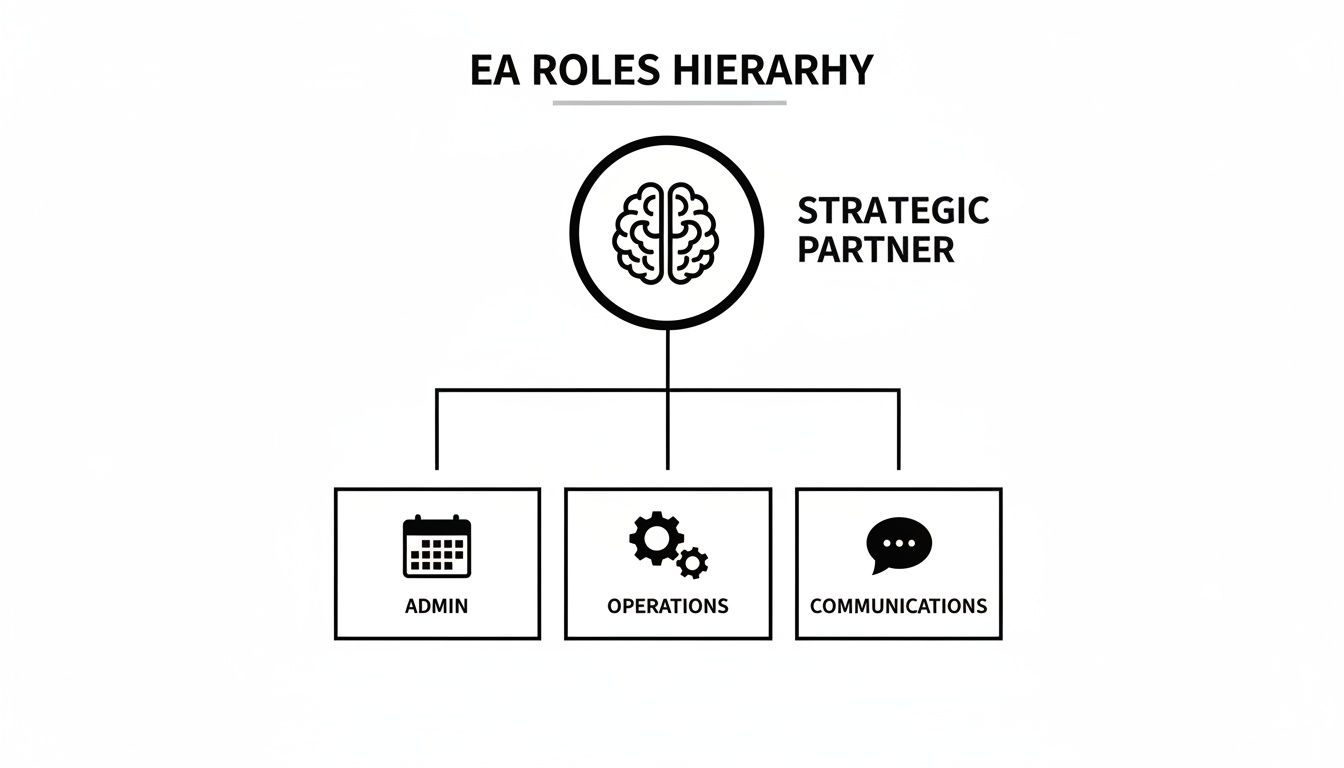
As you can see, while administrative and operational tasks are the core, the real value comes when an EA evolves into a strategic partner who actively helps push business goals forward.
To quickly summarize these domains, here's a look at the primary responsibilities an EA manages.
Core Responsibilities of an Executive Assistant at a Glance
A summary of the primary domains an executive assistant manages to support executive productivity.
| Responsibility Area | Key Functions |
|---|---|
| Administrative Management | Calendar scheduling, email filtering, travel booking, expense reporting, and document preparation. |
| Operational Support | Project coordination, event planning, process improvement, and vendor management. |
| Communications Hub | Acting as a liaison with internal teams, external partners, and key stakeholders. |
| Strategic Partnership | Preparing meeting briefs, conducting research, and anticipating future needs to inform decisions. |
Ultimately, these functions work together to create a smooth, efficient workflow for the executive.
A Force Multiplier, Not Just a Gatekeeper
It's easy to fall into the trap of thinking of an EA as just a "gatekeeper," but that's a very narrow view. A truly effective assistant is a force multiplier—they amplify your productivity and your impact. They don't just screen your calls; they gather intelligence, prep you for that critical meeting, and make sure action items from your last one are actually followed up on.
An elite executive assistant doesn't just manage your time—they create it. By offloading logistical and administrative friction, they give you back the hours needed for deep work, strategic thinking, and leadership.
At the end of the day, the collection of tasks an executive assistant handles is designed to create a seamless operational environment. This frees you, the executive, to operate at your peak without getting bogged down in the details that drain time and energy.
The Daily Mission Control of an Elite Executive Assistant
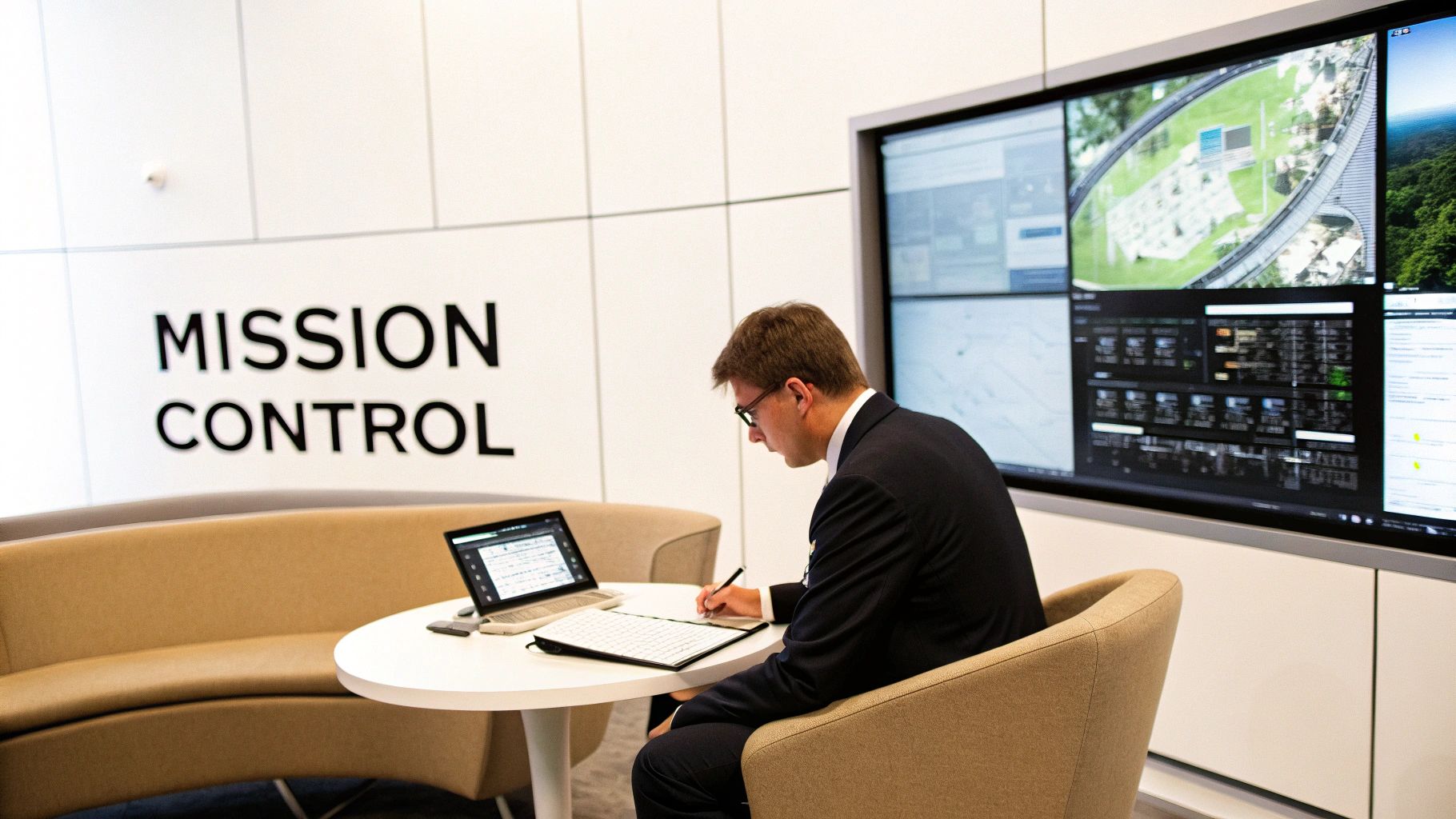
To really get what an executive assistant brings to the table, you have to look at their day-to-day work. The tasks of an executive assistant aren't just a random list of chores. It’s a carefully orchestrated rhythm designed to turn chaos into order and guard an executive's most precious resource: their time.
This isn't about putting out fires; it's about fire prevention. A top-tier EA begins their day before their executive does, clearing the path for productivity long before the first call.
The Morning Launch Sequence
Those first few hours are everything. An EA isn't just playing catch-up; they're actively sculpting the day to remove roadblocks and highlight what truly matters.
This critical window centers on a few key actions:
- Inbox Triage: The EA dives into the executive's inbox, acting as a human filter. They handle routine replies, archive the noise, and sort the rest by priority. The result? The executive only sees what actually needs their eyes on it.
- Calendar and Schedule Audit: They give the day's schedule a thorough once-over. Are all appointments confirmed? Are there any potential conflicts? Is the travel time between meetings realistic? Any necessary tweaks are made before the day’s momentum builds.
- Daily Briefing Prep: The EA pulls together a concise, need-to-know summary. This briefing covers the day's key meetings (with attendees and goals), urgent action items, and any important news that broke overnight.
This proactive morning routine means the executive walks into their day with absolute clarity, not the dread of an overflowing inbox or a confusing schedule.
An executive’s calendar is their single most important productivity tool. A great EA treats that calendar less like a schedule and more like a strategic asset, making sure every minute is invested in work that moves the needle.
Ongoing Daily and Weekly Responsibilities
As the day and week unfold, the EA manages a constant stream of operational tasks. These foundational tasks of an executive assistant are what keep the engine running smoothly, preventing logistical snags from slowing everyone down.
Common weekly responsibilities include:
- Meeting Management: This is way more than just sending a calendar invite. A skilled EA prepares and sends out agendas, captures detailed minutes during the meeting, and, crucially, follows up on every action item to ensure talk turns into action.
- Expense Reporting: They're a master of details, meticulously gathering receipts, categorizing expenses, and submitting reports on time. This frees the executive from a mountain of tedious financial admin while ensuring everything is compliant.
- Travel Coordination: For any upcoming travel, the EA is the mission planner. They handle everything from booking flights and hotels to arranging cars and building out detailed itineraries that make every moment on the road count.
By taking ownership of these essential yet time-draining tasks, an EA builds the stable foundation an executive needs to focus completely on strategy and leadership. That consistent, reliable management of the details is where their real power is found.
Beyond Calendars: The Strategic EA Partnership

While keeping the daily and weekly gears turning is essential, the real magic of a world-class executive assistant happens at a much higher altitude. This is where the role evolves from a support function into a genuine strategic partnership. Think of it as a shift from a reactive task-doer to a proactive force multiplier—someone who doesn't just manage your schedule but actively helps you achieve your most important goals.
This leap involves taking on responsibilities that directly shape an executive's impact and, by extension, the company's trajectory. It’s no longer about managing tasks; it's about managing outcomes.
Serving as a Strategic Gatekeeper
A truly strategic EA does far more than just field calls and organize an inbox. They act as an intelligent filter for your most valuable asset: your attention. Because they have a deep, almost intuitive understanding of your priorities, they can make smart judgment calls on which meetings, requests, and opportunities are actually worth your time.
This isn't about building a wall around you. It's about optimizing your focus.
For example, instead of just slotting every meeting request into the calendar, a strategic EA will:
- Evaluate the request against your current strategic goals.
- Politely ask the requester for a clear agenda and what they hope to achieve.
- Figure out if they can handle the issue themselves or if someone else on the team is better suited.
The result? Your calendar is reserved for high-stakes engagements that move the needle, protecting your time for the work that only you can do.
An elite EA functions as the executive's proxy, capable of representing their interests and making decisions on their behalf in specific contexts. This level of trust is built on deep business acumen and a complete alignment with the executive's vision.
Driving Key Projects and Initiatives
Top-tier EAs are often powerful project managers in their own right, steering critical initiatives from start to finish. They’re not just checking boxes on a to-do list; they're the ones coordinating between department heads, keeping an eye on resources, and making sure the project hits its milestones. This is one of the most vital strategic tasks of an executive assistant.
Consider the planning for an annual leadership offsite. A purely administrative assistant will book the flights and the venue. A strategic EA, on the other hand, steps up to:
- Research potential themes for the offsite that tie directly into the company’s goals for the year.
- Work with department leaders to build a meaningful agenda and engaging sessions.
- Own the event budget, from tracking every expense to reporting on its ultimate ROI.
By taking true ownership of the project, the EA frees you up to concentrate on the high-level strategy and content of the event. They effectively double your bandwidth, making sure important projects don't get stuck in limbo just because you're swamped.
Essential Skills and Tools for the Modern EA
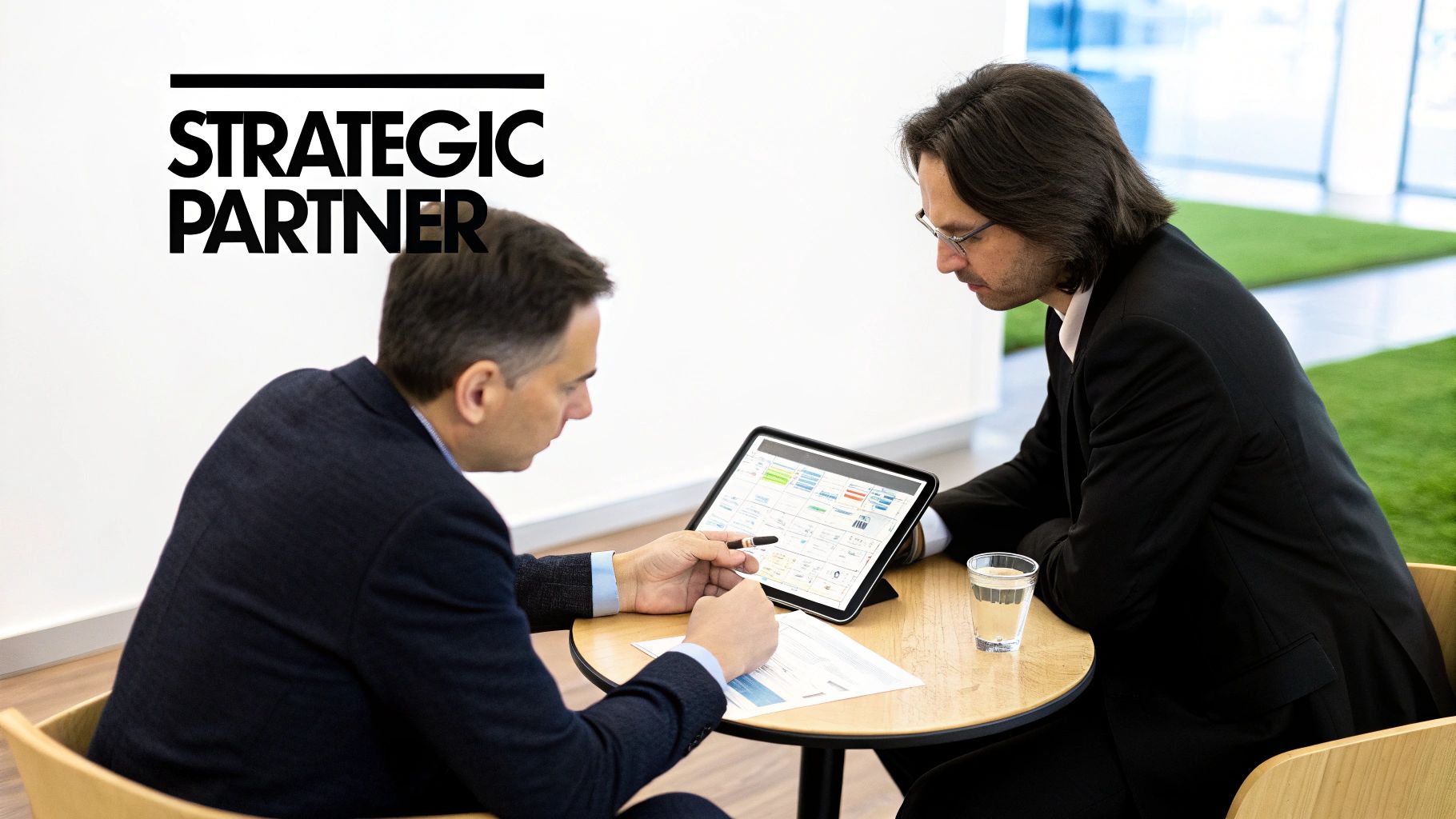
To pull off the sheer variety of an executive assistant's tasks, you need a very specific mix of people skills and technical know-how. The modern EA isn't just an organized administrator; they're a master of emotional intelligence, discretion, and proactive thinking who can handle complex office politics and sensitive situations with total professionalism.
You can think of these soft skills as the EA's core operating system. They're the foundation that allows everything else to run smoothly, from managing confidential information to anticipating what an executive needs before they even have to ask.
The Indispensable Soft Skills
Some personality traits are absolutely essential for anyone in this role. They are the bedrock of the trust between an executive and their assistant, which is what allows a real strategic partnership to develop.
These are the non-negotiables:
- Extreme Discretion: An EA is the gatekeeper of highly confidential information. Being able to handle that data with unwavering integrity isn't just a skill; it's a requirement.
- Proactive Problem-Solving: A great EA doesn’t just put out fires—they see the smoke long before a flame appears. They spot potential roadblocks in schedules, projects, or travel and have a solution ready to go.
- High Emotional Intelligence: As the executive's liaison, an EA needs to read the room, understand what motivates different people, and adjust their communication style on the fly.
- Unflappable Composure: The C-suite can be a high-pressure environment. An EA must be a calming force, providing a steady hand when things get chaotic.
It's these skills that elevate an assistant from being merely helpful to truly indispensable. They keep the engine running, no matter what's happening on the outside.
The most valuable EAs operate with a "no-surprises" philosophy. Their foresight is so sharp that their executive is rarely caught off guard, freeing them up to lead with confidence.
The Modern EA's Digital Toolkit
Beyond personality, today's top executive assistants are tech-savvy operators. They rely on a suite of digital tools to multiply their efficiency and make a bigger impact. Knowing your way around this software isn't a bonus anymore—it's a core part of the job.
This digital toolkit is always changing, but a few key platforms have become central to the role. They automate the routine work and make it possible to collaborate smoothly across different teams and time zones.
- Project Management Software: To keep major initiatives on track, EAs live in tools like Asana, Trello, and Monday.com. They use them to manage deadlines and make sure everyone is on the same page.
- Communication Platforms: You have to be a master of Slack and Microsoft Teams to act as a central hub for real-time updates and quick decisions.
- Advanced Scheduling Tools: Life is too short for endless back-and-forth emails about meeting times. Platforms like Calendly and clever tricks within Google Calendar make scheduling across time zones painless.
Artificial intelligence is also making a huge impact. A recent report found that 26% of EAs now use AI in their day-to-day work, saving them an average of 25 hours a month on routine tasks. You can dig into more data on the state of AI in the executive assistant industry to see how things are changing. This frees EAs from the small stuff so they can focus on the high-value, strategic work that really moves the needle.
When to Choose a Modern Alternative to a Traditional EA
While a great in-house executive assistant can be a game-changer, the traditional model of hiring a full-time employee just isn't the right fit for every leader. The commitment is huge and goes way beyond an annual salary. You have to factor in benefits, payroll taxes, office space, and the serious time and money spent on recruiting and management.
That structure really makes the most sense for executives who need 40+ hours of dedicated, in-person support every single week, usually for complex internal company projects.
But what if that's not you? Many modern leaders and founders have a completely different set of problems. Their biggest headaches aren't about constant in-office needs. Instead, they're drowning in specific, high-friction tasks that drain their time and mental bandwidth. For them, a more agile and flexible solution is often the smarter play.
Assessing What You Really Need Help With
Before you jump into the hiring process, take a hard look at where you actually need support. Is your main goal to find someone to manage the company’s internal workflows? Or is it to reclaim your personal time by getting logistical nightmares off your plate?
This is where a modern alternative—think of it as a personal operations layer—shines. It's designed to handle the core tasks of an executive assistant without the baggage of traditional employment. This model is perfect if your biggest challenges are things like:
- Complex Travel Planning: Juggling multi-leg international trips, figuring out visa requirements, and lining up all the ground transportation.
- Intricate Scheduling: Managing appointments across different time zones, keeping your personal and professional calendars from clashing, and snagging those impossible-to-get dinner reservations.
- Lifestyle and Household Management: Finding and scheduling home services, planning family events, coordinating with vendors, and managing personal errands that keep piling up.
These are the kinds of tasks that demand flawless execution but don’t necessarily require a full-time, in-house employee sitting down the hall.
The real goal isn’t just to hand off a to-do list; it’s to eliminate decision fatigue. A modern support service lifts the entire mental load of managing logistics, freeing you to focus your energy on what truly matters—in your business and in your life.
The Service Model Advantage
Opting for a service-based model like Approved Lux gives you a powerful advantage in both efficiency and flexibility. Instead of hiring one person, you're tapping into an entire platform built for seamless execution. You never have to think about onboarding, training, or what happens when your assistant goes on vacation.
This approach delivers elite-level support with way less friction. You simply send your request—whether it's planning a family getaway to Italy or coordinating a multi-city business tour—and a dedicated team gets to work. It allows you to offload the logistical and administrative tasks of an executive assistant whenever you need to, paying only for the support you actually use.
For founders, frequent travelers, and busy professionals, this model is the bridge between professional productivity and personal freedom. You get all the benefits of a world-class assistant without the heavy commitment and overhead of a traditional hire. It’s a powerful way to run your life more effectively.
Got Questions About Executive Assistant Tasks? Let's Clear Them Up.
Even after laying it all out, it's natural to have a few lingering questions before bringing an executive assistant into your world. Let's tackle some of the most common ones I hear from leaders trying to figure out the best way forward.
Executive Assistant vs. Personal Assistant: What's the Real Difference?
The dividing line is simple: professional versus private.
An executive assistant’s world revolves entirely around your business. Their focus is on maximizing your effectiveness as a leader. Think corporate calendar management, arranging travel for a business summit, prepping you for a board meeting, or acting as a gatekeeper for professional communications. They are plugged directly into your company's operational flow.
A personal assistant, on the other hand, runs your life outside the office. They're the ones booking the family vacation, scheduling a plumber for the house, picking up dry cleaning, and managing personal appointments. While distinct, the lines can blur, which is why many modern support solutions are built to handle the logistics that steal your time, whether professional or personal.
Should I Hire a Full-Time EA or Use a Flexible Service?
This really comes down to the nature and volume of your needs.
If you need someone physically in the office for 40+ hours a week, deeply embedded in complex internal projects and managing day-to-day office dynamics, then a traditional, full-time EA is probably your best bet. That model is designed for deep, singular integration into a company’s culture and processes.
But what if your biggest headaches are specific, time-consuming tasks? Things like coordinating impossible travel itineraries across multiple time zones, managing a chaotic meeting schedule, or liaising with outside vendors. If that’s you, a flexible service is a much smarter, more efficient choice. It’s perfect for leaders who need to reclaim their time and focus without taking on the cost and management of another full-time employee.
Never delegate what only you can do. Your unique strategic vision, final decision-making authority, and core leadership responsibilities are yours alone. An EA can gather all the data you need to make a huge decision, but you have to make the final call.
Are There Any Tasks I Should Never Hand Off to an Assistant?
Absolutely. Some responsibilities should always stay on your plate.
While an EA can draft emails and reports, any critical communication—messages to your board, key investors, or the entire company—needs to come directly from you, in your voice. The same goes for anything central to your personal brand, the company's long-term vision, and the core relationships you’ve built.
Here’s a good rule of thumb: an EA manages the execution, but you must always own the strategy and have the final word.
Ready to offload the logistical headaches without the commitment of a full-time hire? Approved Lux is designed to be your personal operations team, handling everything from maddeningly complex travel to intricate scheduling. See how our modern assistant platform can give you back your time and focus at Approved Lux.
Want the wider view?
Ten categories. One report. Every quarter. The Approved List tracks what's rising and what's fading: data-backed signals, not opinions.
Free to join · Delivered by email